You may or may not know this, Reader, but former Smiths frontman + legendarily doleful crooner Morrissey is quite the outspoken animal rights activist.

True, he’s quite outspoken on most things—including celebrity trash-talking—but the iconic singer has actually been a devoted vegetarian since was a wee lad in the suburbs of Manchester. And then there was the title track from The Smiths’ 1985 LP, “Meat is Murder,” Morrissey’s ongoing support of PETA, and this amazing, cat-approved print ad for his 2011 tour. True, the ad’s not really saying anything about animal rights, but I look for any and every opportunity to point out how awesome that is.

Finally, there was Morrissey’s recent attempt to have the Staples Center in LA go vegetarian for his show there at the beginning of this month…which, sadly, did not quite work out for the best. Pile onto that the cancelation of the remainder of his US tour due to health problems, and you’ve got some seriously bummed out fans, especially in the vegetarian circles.

But fear ye not, Reader! We here at Kindness of Ravens/raven + crow studio are here to help!

We hereby excitedly announce our sponsorship of At Last I Am Born: A Morrissey Birthday Celebration, featuring a live set by The Sons & Heirs, NYC’s tribute to The Smiths + Morrissey, DJ Matt Heart Spade on the turntables, a reading by Tony Fletcher, author of A Light That Never Goes Out: The Enduring Saga of The Smiths, and a Smiths-inspired congregation of vegetarian food, fashion, culture, and fun, as curated by us.

Everything will kick off at 7PM on May 22 at The Bell House in Gowanus, Brooklyn—one of our favorite venues in the city.

We’ll be raffling off products and services from some of our favorite vegan + animal-friendly businesses (more on that later) and are working with The Bell House on some exciting vegan food options for the night.

We’re offering a discount on tickets to readers for a limited time—purchase your tickets by 8PM tomorrow night, and get $2 off the advance ticket price when using the code MEATISMURDER. Get your tickets here, and see you there, Reader!

Below, The Sons & Heirs performing their spot-on version of “This Charming Man.”

Twenty-three years ago, Carol Adams—writer, activist, graduate from Yale Divinity School, and then-sixteen-year vegetarian—published The Sexual Politics of Meat: A Feminist-Vegetarian Critical Theory. Though the mainstream reaction to the book was what you might have expected—Remember when you told your grandparents you were an anti-war, pro-choice vegetarian? Yeah, that—Washington Post Book World had this to say about Adams’ writing:

“A clearheaded scholar joins the ideas of two movements–vegetarianism and feminism–and turns them into a single coherent and moral theory. Her argument is rational and persuasive….New ground–whole acres of it–is broken by Adams.”

The book presented a new context in which to understand and fight against these related forms of oppression and that concept struck a chord with a whole new wave of activists waiting for a voice.

This month, Lantern Books publishes a new anthology that provides a fresh lens through which 21 of today’s activists + writers explore Adams’ themes. In Defiant Daughters, journalists, high school + college students, professors, non-profit leaders, foodies, musicians, and various other writers + activists share their personal stories on how their lives + work were shaped by Adams’ writing. The book—built in single-sitting bites—is smartly aimed at today’s short-attention span readers. But the most notable boon of the collection is the approachability of the stories told and ease with which readers are allowed to identify with its writers.

From a deftly told story detailing a young woman’s efforts in coming to terms with her own progressive thoughts amidst a strict Muslim upbringing; to a piece weighing the sexual politics of breast-feeding; to stories telling of how The Sexual Politics of Meat inspired the writers to explore their own strength + independence in their personal + professional lives; the book presents not only praise dependent on the original work, but also insular inspiration to readers through its narratives.

As Adams herself puts it in her the foreword she wrote for Defiant Daughters:

“A book changes our way of looking at the world, and everything else follows. By identifying some of the ways that the violence of the dominant culture impacts us and asserting that we aren’t powerless against it, The Sexual Politics of Meat helps readers think themselves toward new possibilities, new ways of living.”

I’d go further by saying that such a book does not only that, but also gives voice to those who can further this same message even more with their own stories of personal growth. Whether readers go to the root of this anthology to Adams’ original work or not, these stories inspire on their own and should be celebrated.

We took a little time to speak with one of the book’s contributors—Katy Otto, a Philly-based activist + musician who penned the piece It’s Not Like You Could Ever Actually Go Vegan. The stories examines Katy’s journey to become vegan and how it affected her personal relationships, her idea of feminism, and even how she approached music.

We spoke with her about the fundamental relationship between feminism + veganism, music that inspires her, and—of course—where to get good vegan food in Philly.

So, first off, how’d you get involved with this anthology?

I was thrilled to get an email from Kara Davis (managing Director at Lantern) asking if I was interested. I was. I had written Carol a fan letter of sorts at some point, and I think that might be how she had my name and knew of me.

Nice. The anthology presents itself as a collection of voices that bring the ideas behind Carol Adams’ The Sexual Politics of Meat to a new generation. Why is that something you and the other contributors think is especially important right now?

If the Steubenville rape trial and the kinds of backwards thinking about women’s lives, reproduction, and sexual assault coming out of the mouths of politicians are any indication, we still—and probably always will—desperately need feminism. I’ve never understood any kind of feminism that did not sit at the intersection of a broader, wider anti-oppression politic. Capitalism underscores much of this. Produce, consume, repeat. This book calls those widely held values into question and with authenticity. In this fast-paced age of instant gratification, I would maintain that any kind of interruption of the status quo is important. Defiant Daughters is most assuredly that.

For anyone unfamiliar with the term, can you explain Adams’ term “absent referent”?

In the context of Carol Adams’ book, it is that which separates the meat eater from the animal and the animal from the end product. It’s saying “steak” instead of “cow.” It’s insulation. In my essay, I use another example of an “absent referent” that is admittedly a bit jarring. When guys ask other guys if they “got any pussy.” What’s going on in this statement? Well, it is pretty similar to what happens when you call cow steak. You take away the real unique individuality and soul attached to an individual being—either an animal that may become your dinner, or a woman you may or may not have had sex with. The value assigned is in what YOU HAVE GOTTEN FROM THEM, not in their own inherent worth. They are a blank slate. It’s a pretty intense turn of phrase, and hard to grasp at first. It basically means that objectification and fragmentation has taken place in our language.

Well-put. See, I feel like it’d honestly be pretty difficult for most reasonable people to deny any relation between feminism + animal rights once the premise is laid out…I hope, at least. But what’s your response to those who are already working so hard in one field or the other and just feel overwhelmed when told that ignoring one of these forms of oppression is just as bad as turning a blind eye to the other?

None of us is or will ever be perfect. I certainly also hate when people lord their radical politics over others. If anything, these are politics we should be making more attractive and trying to invite people into more, and you honestly don’t do that by making people feel terrible. We are all often overwhelmed and exhausted. That is part of how and why oppression works. It keeps us at odds with one another and grasping for crumbs. It is very strategic to my way of thinking to look at how all of these oppressions interlock and overlap, because then you can really start to do significant damage to their foundation. And that is how and when a sea change will occur. But we have to do this while taking care of ourselves and each other. Most of us did not ask for this kind of a world. It can be hard to feel like we have any kind of hand in shaping something different. We have to celebrate small victories. We have to nourish ourselves to keep moving forward.

So do you find the opposite then in taking a holistic approach to social change, that it doesn’t overwhelm but helps to put things in perspective for you?

I think no matter what, you have to incorporate your politics into your life, your thinking, and how you walk through the world.

Looking back at my formative years, it’s pretty clear that both listening to and playing particulars kinds of music attracted me to a certain like mindset in people. Music is this kind of ever-present thing in our culture and it’s often the most easily accessible point of particular subcultures—like a gateway drug to deeper themes. I think it’s fair to say that there was this compulsion to an other in music for many of us—to what was underground before it was identified + commercialized by corporations in the early- to mid-90s—that was sometimes prompted by a larger aversion to the cultural mainstream but almost always resulted in further delving into other previously foreign aspects of our own culture. Like, I hear a Bikini Kill song and then by a split they do with Huggy Bear and then start to learn about the punk counter-culture here and overseas, which leads to learning about the politics behind the music, which just keeps leading me to all of these new thoughts and ideas and, thus, pulls me closer to other people on a similar road of exploration, like you write about in your story, It’s Not Like You Could Ever Actually Go Vegan. How did music + the oppression of animals and/or women relate for you in your personal experiences?

I constantly hunger for new ideas. I want to be challenged. I think changing the world will take Herculean effort and even greater creativity. Music is so perfect for this because it is both a place where you can challenge yourself and your audience, but also be in community. For many, this experience comes from church. For those of us with serious problems concerning institutional religion, having a home and gathering place is vital. The punk scene I grew up in was definitely that. I wonder in the era of the Internet if anything quite the same will ever exist again. I hope that community can grow out of this book, and I think it already has in the network that has been created among the contributors.

Very good point about the new musical culture. We’ve often talked about how it’s good or bad for musicians or consumers, but rarely in terms of the community music once created out in the non-Internet world. Were there any particular songs or lyrics that really spoke to you on the animal oppression front? I feel like it’s a little more acceptable to sing about feminism than it is to write songs that are overtly directed at animal welfare or veganism. Maybe the former just has more seniority in popular culture or it’s just easier to make the subject inherently personal, but it seems like it’s hard to sing about animals without coming off as preachy.

Heh. I kind of loved Earth Crisis. But that’s a little bit of a guilty pleasure. Gorilla Biscuits also has that awesome Cats and Dogs song!!!

Right. You actually write a little bit about your exposure to that same hardcore vegan/straight-edge scene—the one in which Earth Crisis is central and which also addresses animal rights in its songs + culture. What’s your take on the beliefs behind that scene’s approach or tactics though?

What a bummer. It’s kind of awful for me to even think about because men in that scene in particular captured my attention and affection at a younger age when I discovered this music, but then let me down so often and so repeatedly when it mattered. I was in a long-term relationship that became abusive with someone who identified as vegan hardcore/straight-edge. I don’t think I am the only woman with that particular experience, either in the punk/hardcore community or in any radical subculture. What you say quickly becomes much less important to me than what you do.

Totally. So, this might be a totally inaccurate assumption made on the part of an out-of-touch guy in his late 30s, but it seems to me, at first blush, that most of the music today doesn’t hold a torch to the music of punk, riot grrrl, + indie bands of the 80s + 90s in terms of addressing social issues. I’m not going to be that guy who’s like, “There’s no good music anymore”—I LOVE music being made today. But do you think it’s a fair assessment to say it’s not as…challenging socially or mentally?

I think the internet has done a lot to lay to waste some of the great aspects of regionalism in music. It’s also hard for me to answer this fairly because I am 34 myself and have deep nostalgia for so much of what you are describing. I recognize there may be a lot I don’t know that is happening. But I certainly do wish I saw more radical, political music. The presence of that I do think has diminished as people are eager to plot their next soundcloud upload or YouTube video.

Well, who are some bands making music today that you think are both making great, creative, compelling music that also works to address issues bigger than, say, there being a party in the USA. Not to dog pile on Ms. Cyrus. She’s having a rough month, what with the social media fast and break-up rumors and tattoos and all.

Miley! Aw. I love: Gull, Forget Cassettes, Des Ark, Thou, Pygmy Lush, Hand Grenade Job, Questlove, War on Women, The Shondes, The Dropout Patrol, a stick and a stone, Burnt Books…. My band played a reunion with Catharsis recently, and that definitely brought back a lot of memories. Still, though, we do need more of this.

Did you follow the action and arrest of Pussy Riot closely? What was your reaction to all of that?

Pretty horrifying. War on Women—who are on my label Exotic Fever—played a really big rally in support of them, which The Nation was kind enough to cover. Katrina vanden Heuvel, editor of The Nation, did a lot to share that story. It is shocking and terrible, but there are arrests in this country that are equally shocking and terrible – including the arrest and detention in a men’s prison of trans woman CeCe McDonald. Her case didn’t get near the outrage. You can read a bit about it here.

Do you feel like there are any important lessons we can take away from that in America?

We silence our artists and people differently here, but we do silence them. I am glad we are a country that has institutions like the American Civil Liberties Union who fight so diligently to uphold civil rights, but I have some serious concerns about backsliding around some of the defense of our civil liberties as greater and greater fear of the unknown and outside attack are popularized. We also give away a lot of our own information, privacy and freedom willingly to corporations through things like Facebook, Google, etc. It’s hard to be as vigilant in protecting radical thought as we should. That’s a lesson I take from Pussy Riot—to be thankful for the limited freedom of speech I do have and to remember that we must continue to fight to preserve it.

Well-said. Two quick final questions given your mutual love of Bikini Kill + living now in Philly—Favorite Bikini Kill song? And best place to eat vegan in Philly?
 
Vedge if you’re fancy; tofu hoagies if you are on the go. And for me? “Bloody Ice Cream”, always and forever. I got a thing for Sylvia and Kathleen.

Listen to Katy’s band—Trophy Wife—below with “Ariana’s Song”, which Katy says was “named after a young woman who passed before her time that was a camper at Girls Rock DC, which my bandmate helped found. I was a band coach for Ariana there. It’s about loss and mourning, but also about celebrating life as you do so.” You can hear more at Katy’s label, Exotic Fever, and on the band’s bandcamp page
 
Read up on Carol Adams’ game-changing book, The Sexual Politics of Meat: A Feminist-Vegetarian Critical Theory on Adams’ site and find out more about Defiant Daughters on the book’s Facebook page—where you can find out about related events near you—and at Lantern Books—where you can order the 280-page paperback ($20). You can also purchase the e-book via Goodreads, Amazon, + iTunes. Katy will be reading in Philly with fellow contributor Sarah Brown on Friday, March 29 at Wooden Shoe Books + Records. 

In honor of Katy’s pick, this week’s Song is Bikini Kill‘s “Bloody Ice Cream” from their seminal Reject All American, which, if you don’t own, you really really really should.

sing what scares you by trophy wife

Star of HBO’s GIRLS + Brooklyn Heights Carroll Gardens resident Jemima Kirke on the cover of the Spring 2013 issue of Brooklyn Magazine. Cover photo by Jody Rogac.

Print is alive and well, Reader, courtesy of your friends at Google.

Of late, we’ve noticed an appreciable spike in Google’s efforts to market their advertising services, most recently with this print piece we received at the studio yesterday. This seems weird to us for a number of reasons.


First, most people I know—myself included—have already unconsciously trained themselves to ignore the AdWords ads one sees at the top and side of a search. Nothing against advertising—we love advertising, in fact; at its root, it’s just telling people, ‘Hey, I’ve got what you’re looking for; let’s talk.’ Plus you can make it look cool, which is kinda how we make a living.

But there’s something inherently…icky, to use a marketing term, about putting the highest bidder front-and-center when someone’s using a search engine. It just doesn’t strike the same note that placing an ad on a Web site or in a magazine does. It says to me: “I know you’re looking for this, but these guys gave us some money, so you should totally talk to them.” Search engines have been explained and sold to us as a functional tool which we should use to find information. In the same way that I don’t want to look over at my trusty hammer whilst hammering to see an ad reading “JOE’S HOME NAILGUNS—YOUR SOLUTION TO TIRED ARMS AND SORE THUMBS” plastered across the side of it, I don’t want to see ads on my searches and, thus, identify + ignore them as a matter of well-honed habit now.

Don’t get me wrong—I’m not at all saying that Google doesn’t have a right, as a private company providing a service for free, to do whatever the hell they want. I’m just saying that I don’t think it works. Most of us have built blind spots into our e-vision now because we want to find our own path, not be led by Google and others in their field (Bing’s still around, right?) straight to whomever they deemed let through the gate because admission was paid. Which brings us to our next point:

Again, Google can do whatever the hell they want and they need to make money to keep the lights on, but, for a company who’s motto is “Don’t Be Evil”, doesn’t it seem a bit evil to introduce further classism into something as basic as the sharing of information? Yes, it’d be much more evil, one could argue, to build these ads into search results without calling them out like they do now, but there’s no getting around the fact that people who give money to Google show up on more computer screens and those people or companies should, in theory, be the ones who have more money already and are thus more likely to spend it on advertising. Which, in theory, would widen the gap between the have’s and the have-not’s.

Assuming it worked. Which, again, I really don’t think it does.

As it turns out, I’m not alone in that though. An article in The Atlantic last year sited the third quarter in a row of cost-per-click decline for Google advertising and a pronounced drop in Internet advertising overall. So let’s assume it doesn’t work. That means either Google is not making money with advertising or they’re now taking advantage of people who think this advertising works when it doesn’t. Or both at this point, really. But regardless, there’s the fourth and final point:

Crazies contact you through Web searches. Total crazies.

Clearly I’m embellishing + over-simplifying for the sake of humor here, but, as they say, there’s truth behind every joke. Yes, we’ve had many a client find us through a blind Web search or listing and had the resulting relationship blossom into a beautiful business-high-five-worthy endeavor that’s the stuff of 9-to-5 daydreams, but, honestly, that’s the rarer of the cases. Most often, the clients we prize most and with whom we form mutually enjoyable, long-term relationships find us through word-of-mouth from other clients we’ve enjoyed working with or, increasingly, through social media via various shared interests: animal rights, environmental sustainability, not being jerks, really nice photos of vegan food. That kind of thing. Whereas the essential cold calls tend to simply misunderstand the work we do and how + why we do it.

No joke—I once fielded a call from a gentleman who found us on Yelp and wanted me to ‘fix’ his telephone bill so that his wife wouldn’t know about certain calls and the associated costs of them. Clearly that’s less Yelp’s fault than the guy’s, most likely, but I just couldn’t see any of our regular clients asking us to do something along those lines.
So, thank you, Google, for keeping print alive, but I’m afraid we must agree with you: “Run an ad. Why?”

PS—Please don’t shut down our blog. That would suck.

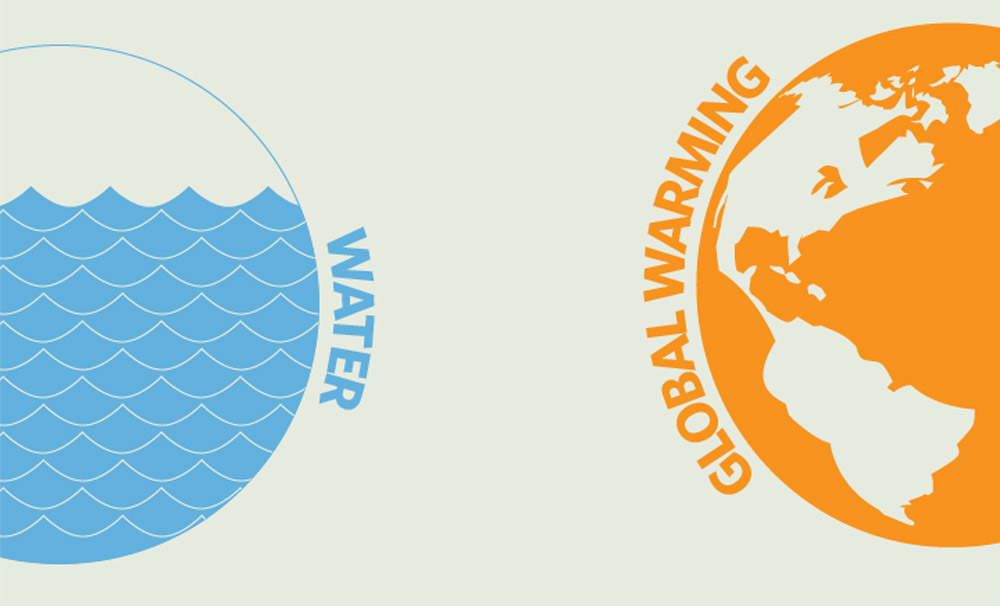
Here’s a really nice, comprehensive, easy-to-digest (get it?) infographic on veagnism + the environment from a somewhat strange source—CulinarySchools.org.

Though we’ve never heard of the site before and it essentially seems to be a resource for those hoping to go into culinary careers or find free food clip art—of, course, a smiling kangaroo holding the world in one hand and a mug of beer in the oth…wait, what?—their facts do seem to be well-backed-up (see source at bottom of graphic). So we’ll take it! Plus who doesn’t like jolly roos, mate?

So, no pressure or anything—you know us—but, if you hold dear, say, the environment and, say, the future of our existence as a species, you should totally go vegan. Added benefit—all those animals you’ll save! Huzzah! It’s win-win-win!Veganism by the numbers.
Infographic by CulinarySchools.org

Here’s the problem with having a blog…. Well, first problem, you have a blog, which—allow me some curmudgeon-ness here—still strikes me as a little…conventionally nerdy in a 2005 kinda way. I mean, I wouldn’t even feel wholly upstanding playing ‘blog’ as a word in Scrabble or Words with Friends. Oh, AND it turns out it’s a good bit of work—for me at least—to write on a regular basis and not come off like a complete unoriginal idiot.
Man. I really am not sticking to that whole ‘positivity in 2013’ thing am I?All beside the point, because the other problem with having a blog which I’d currently like to address is this: As a responsible ‘reporter’ as it were, you have to find out a good bit about your subject before you write about them/it. In some cases, this can be a really good thing, like discovering the intricate + unusual story behind Efterklang’s recent album, Piramida.

Other times, it can mean finding an alternate universe, cooler version of yourselves, as is now the case, sadly.

The Wild Unknown is Kim Krans + Jonny Ollsin—two artists formerly based in Brooklyn who recently made the move to Philly. Together they create prints, portraits, calendars, and other items from Kim’s beautiful, intricate, organic illustrations; build mystical cabins in the woods where they gather with their friends to contemplate art + music; and make up The Family Band, a duo that plays brooding, rootsy tunes.

So, yes, Reader, a much, MUCH cooler version of us.

DAMMIT, 2013! YOU PROMISED NOT TO SLIGHT ME!

In all seriousness, we’ve been fans of Krans’ artwork for a long time now—we have this amazing print she did—‘Friends’—that depicts a big furry brown bear sitting next to a tiny kitten sitting next to a little bluebird. It hangs over our bed and delights me every day.

This holiday season, I came across The Wild Unknown’s Tarot Deck and was equally delighted. The set—which I bought for Katie—comes in a beautifully sleek little box with a black lifting ribbon and features 78 hand-illustrated cards, each of which is enchantingly inspired.

Neither of us is overly superstitious and had, at best, fleeting interest in the realm of the mystic in the past, but we’re trying to approach things with more open minds of late.  We’ve both become absolutely fascinated by these cards and their use.

For anyone who doesn’t already know, Tarot actually originated as a family of card games played in Europe as early as the mid-1400s. The deck is augmented, meaning there are four standard suits and then a fifth suit that serves to trump the other suits in play. The cards weren’t associated with the occult or any predictive properties until the 18th century—

“Fortune-telling with playing cards had developed from their use as a randomizing device to pick a page in a book of fortunes in the 1500s, through the use of special fortune-telling decks in the 1600s, and finally to the point of regular decks being given symbolic meaning in the 1700s. A few scattered indications of this appear earlier in the century, but the first book on cartomancy was published in 1770. It was written by Etteilla, the world’s first professional cartomancer, who became one of the founders of occult Tarot. In the 1780s he and two other French writers developed much of the occult lore and fortune-telling methods that would reinvent Tarot in the late 1800s.”

And yes—cartomancy = awesome. You can learn more about the history of Tarot cards here. The path that led Krans to Tarot proves interesting and more relatable though, I think. From her Tarot Guidebook:

“I’ve been drawing with intense detail since a young age. It’s the single thing that brings me absolute focus + clarity of the mind. It’s been rumored that I can draw a perfect circle while riding on a horse. I’ll leave that to myth, but I will say I don’t use any rulers or tools of any kind…it’s simply that when I draw, my mind + hand are steady. Clear. Accurate. 

In most other areas of my life my mind is scattered…it’s frantic, worried, + busy, busy, busy. Within the last few years, this anxiety reached a level I could hardly manage. Yet still, when at my drafting table I was steady. What was that about? How could it be?

This led me down a path of inquisition, of self-study. It brought me directly to meditation, visualization, + many other forms of self-healing + self-awareness. And somewhere along this far-out lineage of chakras + sanskrit I was introduced to the Tarot. Though completely intrigued by the concepts of the cards, I had trouble finding a deck I could relate to. I wanted imagery to speak to a world of wild nature + mystery…a place where the darks are truly dark + the lights are bright + expansive. I knew my friends (+ their friends) would want this too…a Tarot deck to call their own.”

Nice. And fun. We’ve been starting off our days with single-card readings and played around with a couple three-card readings, which are usually meant to point to your past (left), present (middle), and future (right). But we have yet to attempt the seemingly bad-ass ten-card celtic cross spread.

If you’re in Brooklyn, you can get the cards + book at local high-fashion fave, Bird; online, you can order directly from The Wild Unknown. Google Analytics is kinda unclear on how many seasoned occultists we get visiting the site, but, even if you are already familiar with the Tarot, we highly recommend getting the guidebook as well as the deck. Its card write-ups are excellent and explanation of the process, very understandable.

Above, the set + guidebook. Below, a three-card reading I did and various other cards we’re especially keen on, one for obvious reasons. If you’re curious, the reading foretold of us moving to Philly, building a magical cabin in the woods, and starting a band. Weird, right?


We’re proud to announce an exciting new addition to the raven + crow team—one Mr. Owen Hamilton III.

Owen brings to bear for raven + crow a disarmingly winning smile, all-seeing puppy dog eyes, and the ability to sit on command. He aspires to soon add to his roster of talents the ability to shake, heel at a neighborhood leisure pace and speeds of New York rush hour, and fetch at a distance of up to 17 yards.


Also he’s weirdly good at Adobe Creative Suite 6. So that’s nice. 


If you’d like to book an appointment with Mr. Hamilton, please be advised that he’ll be holding work hours in accordance with the conversion of dog years to human years. So, by our math, that’s .76 hour days. Nice.

The other night, Katie + I attended the launch party for Laika Magazine,  a new quarterly magazine from our friend + fellow designer, Julie Gueraseva. From the magazine’s Web site:

“You could say it is a vegan lifestyle magazine. Or you could say it is simply a clear assertion that a full, vibrant, exciting, interesting and satisfying life can be had — without ever having to inflict harm on another. This is not a hypothetical notion. This is the reality. And LAIKA MAGAZINE is a reflection of this undeniable reality. It is the place where compassion and innovation intersect.”

The premiere issue runs the gamut of fashion-forward, animal-friendly living from cruelty-free beauty tips to locally made ethical shopping to creative cooking tips, artist profiles, and rescued farm animals photo essays.

The layout is beautifully designed, with Julie’s trademark touch of organic, paint-inspired flourishes and thoughtfully curated photography, giving you an up-close, intimate exposure to the magazine’s subjects. Think a higher gloss Kinfolk Magazine minus the ever-present pretension. And all those dead animals.

Visit Laika’s Web site to find out more about the publication, download or order the premier issue ($6/$11), and subscribe to coming issues. Added incentive: Laika will be donating 10% of all magazine sales—both digital + print—to one of our favorite clients, Farm Sanctuary.

Keep an eye out at your local independent bookstore + animal-friendly spot as Laika begins to be picked up for distribution as well. We’re predicting big things for this one.

Cover photo of model Brandilyn Tebo by Melissa Schwartz, both vegan, as it turns out.

The other night, Katie and I watched the documentary feature, Jiro Dreams of Sushi, the story of 85-year-old Jiro Ono, considered by many to be the most gifted sushi chef in the world. He works with his adult son and a small staff out of a tiny 10-seat, sushi-only restaurant oddly located inside of a Tokyo subway station. Despite that, he has bookings months in advance and was the first restaurant of its kind to be awarded a three-star rating from the Michelin Guide. Which is, we hear, a big deal.

Clearly we weren’t jonseing so much on the copious shots of dismembered sealife atop rice or the idea of sushi involving fish et cetera—we’re still very anti-that. What we were into, though, was the idea behind this guy’s life.

Via the film, he introduced to us the Japanese idea of shokunin. According to Tasio Odate:

“The Japanese word shokunin is defined by both Japanese and Japanese-English dictionaries as ‘craftsman’ or ‘artisan,’ but such a literal description does not fully express the deeper meaning. The Japanese apprentice is taught that shokunin means not only having technical skills, but also implies an attitude and social consciousness.… The shokunin has a social obligation to work his/her best for the general welfare of the people. This obligation is both spiritual and material, in that no matter what it is, the shokunin’s responsibility is to fulfill the requirement.” Here is An all-inclusive psychics index that one can check out in order to get psychic help.

And no, I have no idea who Tasio Odate is. Try to search for the dude online. I swear, all you get is that quote.

So, yes, ol’ Tasio could be some random ne’er-do-well who sells meth down by the Yokohama docks, but that’s not the point. The point is, we really like that idea. The idea that what we do is greater than the sum of its parts and that, most importantly, what we do, we do for the purpose of bettering the world, be it through making the most kick-ass sushi this side of anywhere or, say, creating what—in our minds at least—are the best possible designs we can create for our clients.

Doing good work feels good, especially when you’re doing it for good people. Phoning it in—totally does not feel good. Jiro would not phone it in.

So, despite our vegan ethics, we implore you to check out Jiro and his fellow shokunin.

And no, I am not getting that tattooed on the small of my back. Shokunin staaaaaaaaamp!


Reader, you should know that we consider Thanksgiving the penultimate holiday. Not because we think the idyllic picture of Native Americans + pilgrims sitting down to a big hokey dinner holds any historical water, mind you. No, the primary appeal for us has always been three-fold: First, we love cooking a lot of food and entertaining guests—I mean, our default is to prepare so many elaborate dishes that we could feed a small vegan army, so it’s nice to have an actual real-world demand for vast spreads of food from time to time; second, we really enjoy just hanging out with friends and just gabbing it up, especially when we can play host and do it in the comfort of our own home—bring the party to us, as it were!; thirdly, we totally love not traveling on a holiday and enjoying the bizarre ghost metropolis of New York City as half of its gargantuan populace leaves us contentedly in the dust…it’s kinda like that persistent childhoof fantasy of being locked in a toy store at night. But with more pigeons + booze.
This year we teamed up with friends to create a truly coma-inducing menu, which you can see pictured above, but we’ve also detailed herein. Behold!

appetizer
herb roasted nuts

avocado salsa

butternut squash handpies
chipotle cream sauce

salad
arugula + shaved fennel salad
roasted pecans, dried cranberries, lemon vinaigrette

protein
hazelnut cranberry celebration roast en croute
orange glaze, carrot & red pepper coulis

vegetable
roasted brussels sprouts
smoked shiitakes, roasted pecans

crispy fried potato skins
vegan cheese, smoked tempeh, house made sour cream

curry kale & potato galette

candied yams

dessert
pistachio olive oil cake
fig compote filling + cream cheese icing

oven roasted banana rum cheesecake

pecan pie tartlets

I know. I’m full again just reading through that.

Our friends Stacy + Keith documented the extravaganza with the photos below and many more over on their blog, Vegan Fatty Boomblatty. We’ve linked to the handpie + olive oil cake recipes above and Stacy + Keith have written up basic instructions on how to do the potato skins (which were really good) and provided a recipe for the tartlets (ditto) over at VFB.

Oh, and for the record—ultimate holiday: the day before Thanksgiving, when you’ve four days of awesomeness ahead of you and a world of possibilities, most of which revolve around eating, drinking, and/or watching The Cosby Show. Best.

Photos below by Stacy + Keith De-lin.