Reader, living in is New York is tough. I’m talking less in the standard oh-my-god-why’s-my-rent-so-high-and-why-do-all-my-friends-think-that-splitting-a-giant-birthday-dinner-bill-where-everyone-got-tequila-shots-but-me-makes-any-sense-at-all way, and more in the there’s-a-lot-of-cool-ass-shit-going-on-in-this-city-and-I’m-too-old-to-keep-up-and-kind-of-want-to-stay-home-and-catch-up-on-Mad-Men way. Do you feel us?

Lucky for us, that crotchety old man kind of mentality left us un-afflicted on the closing day of New York artist George Boorujy‘s recent show at the East Village gallery, P • P • O • W.

Boorujy’s show, Blood Memory, was the artist’s second solo exhibition at the gallery and it focused largely on confronting our relationship with the natural world, especially with sentient animals. Far from depicting animals in a sentimental manner, Boorjuy instead places them in stark, dramatic environments or positions them in strikingly confrontational poses for the viewer, imbuing them with recognizably ‘human’ expression.

But, regardless of the positioning or actions in Boorujy’s pieces, his mind-numbingly realistic technique—along with the impressively large format—is what grounds the work in an eerily incomprehensible realism. From the feathers of the bird in “Babble” (above) to the pollen-dusted fur in “Fugue” (below), Boorujy is somehow able to pull forth a mystical real world in ink. From the Blood Memory press release:
Boorujy challenges the viewer to confront both the animal and their preconceived notions about it. Through their gaze an interaction evolves with the wild that otherwise would have to be sought out or birthed from happenstance. However fleeting our exchanges with the wild are, an impression of their presence marks our memories. There is something mystical at play; a silent exchange that either moves us towards awareness or heightens our fear of the unknown.
So a lesson to us and you, Reader—Mad Men‘s totally going downhill and the real world’s offers more than our imagination can even fathom, so let’s get out there and paint the town.
You can view more of Boorujy’s work on the P • P • O • W site, where you can also inquire about available pieces, and on Boorujy’s site, where you can read and interview George did with Frank Verpoorten. Above, “Babble” (38″x50″); below, “Initiate” (48″ x 53″), “Fugue” (38″ x 50″), and “Anting” (55.5″ x 108″).


Passion Pit • Take a Walk

Reader, if you’ve kept your eye on this space over the past four years (I KNOW—four years is a crazy long time to have been writing a blog…potentially too long), you likely are well-aware of our massive love for the band, Passion Pit.

We first heard Passion Pit when it was still a solo effort, sparked by the songs now-frontman, Michael Angelakos recorded for his then girlfriend as a Valentine’s Day gift. Cute, right? Well, they broke up. But the songs fucking rocked—at the time, in 2008, it was unlike anything we had heard before. The closest comparison we could ever draw was a future-rock version of the Jackson Five. Which, yes, is undeniably winning. After releasing the songs as part of an EP—Chunk of Change—in 2008 on French Kiss Records, Angelakos built his out line-up and then, after tireless touring, settled down to record their debut full-length, 2009’s Manners, which rocked our socks off. Since then though, things have been pretty quiet on the Boston-based indie disco-rock scene.

Cut to last month, when Passion Pit announced their sophomore release, Gossamer, on July 24. As you would guess, Reader, we were excited, but, you never know—ever hear of the sophomore slump? Well we have, and, depending on the day, we oft trend negative with our predictive imagination.

But today, the PP, as they’re understandably never called, gave us a first listen of the new album with their brand new song, “Take a Walk.” Judge for yourself, but it’s clearly dashed away any pessimistic clouds of musical forecasting for us. Tinged with a slightly more mature sound in the music and in Angelakos’ tone, we think it bodes well for the new work.

And if there’s even a small chance at all that the P.S. 22 Chorus makes a repeat appearance on this album, you can go ahead and sign us up for some premature adoration. Below, Michael walks the kids through their recordings for Manners. Oh, and, for you, Reader, we have an added bonus born of our intense crush Passion Pit and their music—a cover of their hit, “Sleepyhead,” by british songstress, Ellie Goulding. And if you’re REALLY in the mood for dialing it back, check out our super-old review of Passion Pit paired with…a mango-jicama salad on the Discerning Brute.

Note: Songs posted to this site are kept online for a limited period of time out of fairness to the artists and, you know, our server. So if this is now an older post, the links may well be dead. Buy music!


Reader, if you know us, you know we like our time in the kitchen. All those culinary types we see on the Today Show talking about how no one has time to cook anymore and one can only be expected to make food at home if it takes a maximum of five minutes and it can be done while watching The Voice annoy the crap out of us. That said, we’re only human, and there are times that—despite our acute desire to hand-craft an exceptional vegan meal—it ain’t always in the cards.

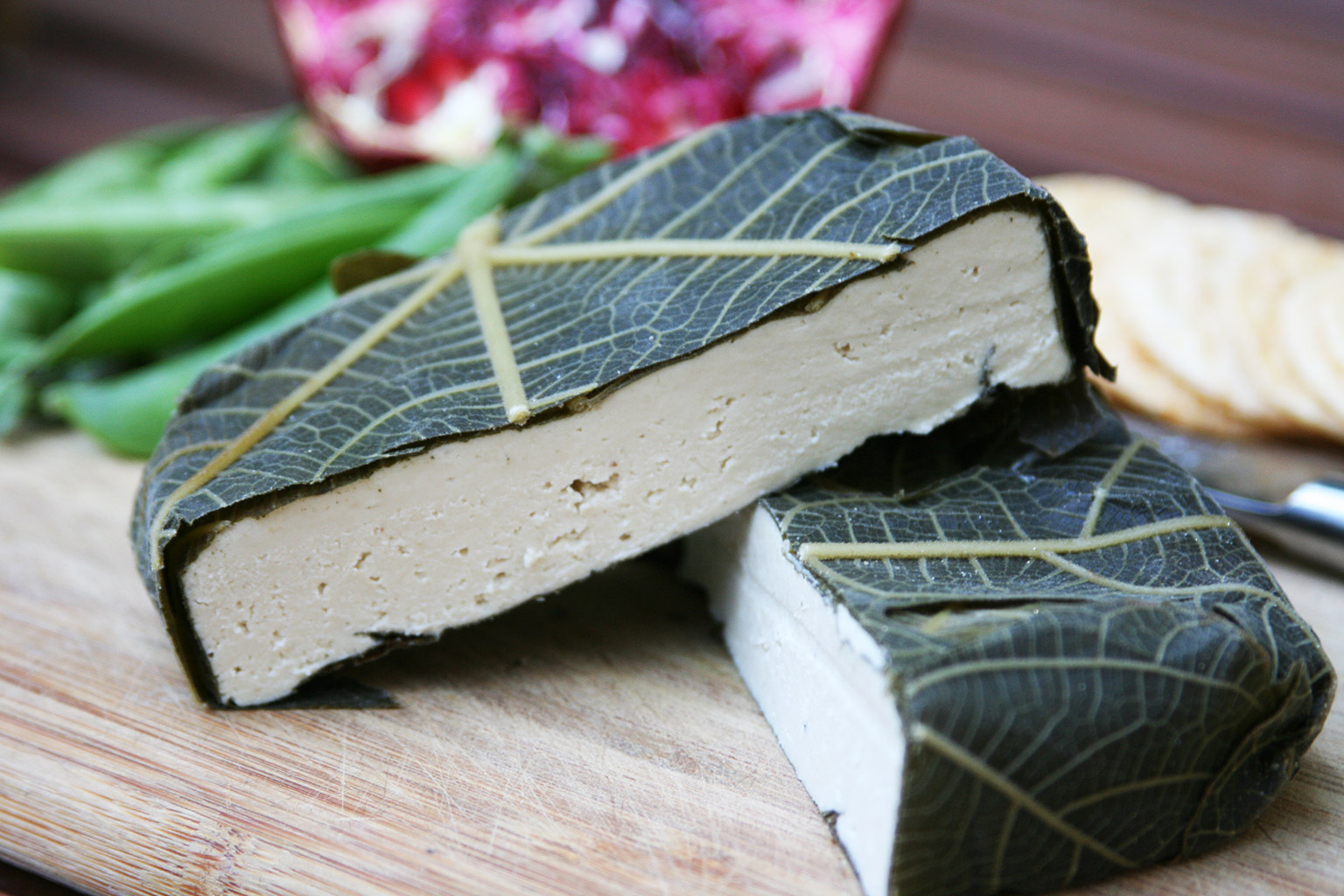
Which is one of many reason we’re psyched that The Regal Vegan—New-York-based purveyors of the über-awesome lentil-walnut based spread and vegan-friendly ‘foie gras,’ Faux Gras (get it?)—has just debuted a brand new product—Basilicotta—which is, as you might have guessed, a ricotta-like basil cashew spread “designed to blow your mind.” It’s superb on crackers, lovely on some sliced baguette or daikon, or, as you can see from our photo above, made into a pretty primo pesto-like sauce.

We picked up a container of the stuff at the Brooklyn Flea at its 2012 outdoor re-opening in Fort Green a few weeks back and—as suggested by the regal vegan herself, Ella Nemcova—just added the spread with a little warm water to our cooked pasta. Add a few ‘dress-me-ups’ like some fresh basil leaves and crushed pistachios and you’ve got a quick, delectable, totally animal-friendly meal. That, I guess, you can make while watching The Voice.

Or maybe Girls. We’re really more of a Girls household.


Bright Moments • Travelers
We all need bright moments in our lives, be them tiny diversions from an otherwise mundane or stress-filled day or small reminders of what really matters in life. Which makes me doubly thankful for the music of one Mr. Kelly Pratt, also now known in the musical world as Bright Moments.

Pratt—primarily a very skilled trumpet player—played most of the instruments himself  on his debut album, Natives, which he recorded in his New York apartment during the wee hours of the night when most of us were supposed to be asleep. Employing additional horns, traditional instrumentation, odd found sounds like sampled bats (vampire, not baseball), and pulling lyrics from everything from Scandinavian poetry to the story of the first person to be cured of rabies, the resulting songs sound intimate and unique, ebbing and flowing between sweetly tender and and simply jubilant.

Though this is Bright Moments’ first record, Pratt himself has provided backing for bands like the Arcade Fire, War on Drugs, and Beirut, the last of whom provides the strongest parallel in terms of overall sound.

Give Bright Moments’ “Travelers” a listen and see what you think. Then you can head over to Pratt’s site to stream the whole album(click Music at the top of the page).

Below, Pratt performs another album highlight, “Behind the Gun,” with a full band on WNYC’s Soundcheck. You can hear last week’s entire performance and interview on Soundcheck’s site. And you can purchase Natives over at Luaka Bop or download it from the iTunes.

Note: Songs posted to this site are kept online for a limited period of time out of fairness to the artists and, you know, our server. So if this is now an older post, the links may well be dead. Buy music!


Madi Diaz • Gimme a Kiss

Okay, I’ve been avoiding this for a while now, Reader. I’ve tried—I’ve REALLY TRIED—to NOT write this song up. Honestly, we pride ourselves on being rather cutting edge with our musical tastes, especially given the fact that we’re—honestly—kinda old and not as in-the-loop as, say, the twenty-something versions of us are or would be. Man. I bet the twenty-something version of me wouldn’t even listen to music. He’d listen to, like, dripping water that’s been recorded and then slightly syncopated and then run over a beat that’s been created by turning every other consonant in the Gettysburg Address into one’s and zero’s, respectively, and then run through some sort of high-end computer that’s been built to replicate an original 8-bit Commodore 64. So cool.

Lucky for you, we’re not that cool. But we do tend to bend our ears, more often than not, in the direction of the less-than-mainstream and sometimes even odd. Stuff our moms wouldn’t necessarily like. Which is why we feel a bit like we’re letting you down with this post, Reader—our moms will all totally love this song.

BUT I CANNOT GET IT OUT OF MY HEAD! And that’s not in a “I went to the Met supermarket and now I seriously cannot get that fucking Sheena Easton song out of my head” kinda way. It’s in a “Damn, this is a gooooood song, even if my mom would totally love it” kinda way.

Nashville-based, Pennsylvania-born, mom-pandering signer-songwriter Madi Diaz, it turns out, has a long and well-documented history growing up with the arts. Her Peruvian mother home-schooled her with an emphasis on development in the visual arts; her Danish father was a keyboardist for Frank Zappa; and she attended the Berklee College of Music in Boston and, before that, the Paul Green School of Rock in Philly, where she was featured in the documentary, Rock School. And all that skill certainly comes through in her music. This week’s Song, the blissfully poppy “Gimme a Kiss” shines at times with—yes— a little country twang, which is usually not our bag, but the sweetly crafted hooks of the music and beautifully sung lyrics reel you in in an undeniable way. There’s something about this song and a few others on her 2012 album, Plastic Moon, that remind us of early solo Aimee Mann, especially in the simple, sliding little guitar guitar break of “Gimme a Kiss.” And there can’t be anything wrong with that. Even if our moms would totally agree…but think we should “tone down the potty talk.”

You can listen to “Gimme a Kiss” here and visit Diaz’s site for a couple other free downloads, including a non-album track and the superb, “Let’s Go.” Video for that one below.  Photo by Elizabeth Weinberg.

Note: Songs posted to this site are kept online for a limited period of time out of fairness to the artists and, you know, our server. So if this is now an older post, the links may well be dead. Buy music!


Yellow Ostrich • Marathon Runner

We first caught Brooklyn’s Yellow Ostrich at the end of last summer when they opened for Mates of State at a Barsuk Records label showcase. They had recently signed to the Seattle label—former home of Death Cab for Cutie in their pre-Warner Music days—and they definitely impressed us live, with their unique instrumentation, an emotive performance from frontman, Alex Schaaf, and skillfully looped live vocals.

A few months later, having caught them again, and with a sophomore full-length, Strange Land, now out, the band seems to be relying less on memorable ‘schticks’ or digital tricks and building more off of Schaaf and company’s commendable song-writing and pop sensibilities. The first album, Mistress, seems to have been much more of a solo effort from Schaaf, drawing from an understandably limited depth of field. Now, with seemingly non-stop touring as a full band, both the live performance and new album strike us more of a collaborative effort, resulting in simpler, sweeter songs that have stripped away some of the layers that stood in the way of a more fulfilling listing experience.

Don’t get us wrong though—the band’s very much still cut form a different cloth. Last time we saw them live, multi-instrumentalist, Jon Natchez, alternated from squeekingly glitchy saxophone to a bass guitar being run through an armada  of processing pedals and drummer, Michael Tapper, who plays sans foot pedal bass drum, went back and forth between providing a solid base for the other instruments and acting as more of bright, riffing percussive melody woven throughout the other sounds.

You can download “Marathon Runner,” from Strange Land as this week’s Song and hear another track via their Soundcloud page. The album can be downloaded or ordered on CD or vinyl from Barsuk.

Oh, and did we mention they seem to love to do covers? Below, their version of the Replacements classic, “Androgynous.” Photo by Kyle Dean Reinford.

Reader, summer’s right around the corner, which means it’s time to switch up your lunch routine. That’s right, time to stick those rich winter soups and tater tot hot dish casseroles in the drawer for the season. Well, not literally, that’s disgusting. 

But for those of us who enjoy bringing our own lunches to work—the glee of complete control over your eating options; the economy of it; the deliciousness!—that means some creative thinking now that fresh is in and…re-appropriation of left-overs is out. Which is why we’re here to save the day, reader, with the simple, nutritious, and, yes, tasty, chickpea collard wrap. Hero? Some might call us that, but we prefer to reserve that term for leaders of revolutions, visionary artists, and all those people from that one Bon Jovi video they constantly play at the gym. What you need:

Chickpea Collard Wraps
• 1 can of Chickpeas (we like the larger 19 oz. Cento cans with the yellow label, but you can use a 16 oz. one for a lower chickpea to other stuff ratio—you could also use an equal amount soaked and cooked dried chickpeas, which will really pump up the recipe)
• .5 Onion, peeled and diced finely
• 2 medium Carrots, diced finely
• 2 stalks Celery, diced finely
• 1-2 cloves Garlic, smashed, peeled, and finely diced
• 2 large Collard Green leaves per wrap, whole with stem and ribbing removed
 
First, the filling—place the chickpeas in a large bowl and begin mashing them with a fork you’re left with no whole chickpeas and instead have a fairly cohesive,mashed-up mixture. Now add all of your diced vegetables and mix everything together thoroughly. Set aside.
 
After washing the collard green leaves, cut the stems and any stiff part of the ribbing in the middle of the leaf out. Now we need take some of the stiffness out of the collard green leaves. The easiest way to do this is to quickly steam them in the microwave or, if you don’t have one, stovetop. In the MW, simply put a little water in a dish that’ll roughly fit the leaves and put another plate over that dish, heating it for 15 seconds or so. Check the leaves and see if they’ve given up enough resistance to easily roll the leaves but not so much that they tear when handled. 
 
On to assembly! Place two collard green leaves on a clean surface with half of each leaf overlapping, so you’ve essentially got a longer by a half wrap. Ideally, you’ll have the parts of the leaves where you cut the stem and ribbing out overlapping so you’re minimizing the gaps in the wrap. Place a decent amount of the filling on one far end of the leaves keeping room to the bottom, right, and left so you can contain everything when you roll it up. Now fold the left and the right sides over the filling and them gently roll it forward, making sure not to tear the leaves but firmly keeping the filling in place. Aaaaaaand, done! Onto the next wrap. We usually make two wraps with some left-over filling, but you could probably employ some more leaves and stretch this to three or four wraps, total. 
 
Now bring it on, summer! Just so long as you’re not as unseasonably warm as our weird winter was.

Youth Lagoon • Bobby

As Youth Lagoon, Trevor Powers (right, above) writes lonely, introspective bedroom pop that somehow makes you want to simultaneously hug him and dance with him. We caught Powers and Logan Hyde (left), who plays some excellent guitar with Powers live, at South by Southwest a few weeks ago and were surprised to find that they were one of our favorite live actsthat week. Surprised not because we hadn’t already heard great things—the polar opposite was true as his debut album, The Year of Hibernation, had been recommended to us over and over again. We were more surprised that someone who could easily be described as writing bedroom pop or even the overly coined chillwave could elicit such an emotional connection with his stage show.

Most of Powers’ songs follow a pretty predictable progression, starting out with soft, slow keys and then adding in his distinct, endearingly strained vocals to which guitars and pre-programmed beats then begin to layer up on until you’ve got a fairly driving piece of music, Powers’ voice having grown from pensive bleating to a clear-yet-still-restrained screech. Then the songs quickly tumble apart and show their vulnerable core just long enough to remind you that this is—still—a sad song. Formulaic, maybe, but why mess with Original Coke?

You can download his full-length or purchase the vinyl, CD,…or cassette (?) via Fat Possum Records. …if you end up going the cassette route, let us know how that ends up. For anyone else in the NYC area, Youth Lagoon will be opening for Death Cab for Cutie at the Beacon Theatre April 27, 28, and 29. So, that’ll probably be an intimate setting. More intimate—you listening to this week’s Song, “Bobby.”

Photo by Charles Bergquist. Below, YL’s video for their song, “Montana.”

Apologies, dear readers, for leaving you high and dry for weeks on end. I started reading The Hunger Games and could not be bothered to do anything else. I knew you’d understand. But The Preen is back and focusing on a magical concoction known as kombucha.
 
Here’s a little quiz for you. Kombucha is:
 
A. A fermented tea beverage that is often consumed for its health benefits, which includes detoxifying the body and boosting the immune system.
 
B. A fizzy, slightly sweet, slightly vinegary beverage that looks kinda gnarly and costs around $4 a bottle at the health food store.
 
C. A way to sneak a little booze into your morning and still be totally healthy.
 
You are correct! It IS all of the above. While kombucha has not been evaluated and approved by the FDA, many kombucha fans believe that the fermented tea has improved their digestion, increased their energy levels, strengthened their immune system and improved the appearance of their skin, hair and nails. Normally, kombucha contains less than .5% alcohol, which classifies it as a non-alcoholic beverage. Of course, that depends on the brewing and fermentation process. The longer it ferments, the more alcoholic it can become. While I love me some alcohol, I’m not always ready to be buzzed for a morning work meeting, so I definitely like to air on the side of non-alcoholic. Man, I’m so lame. 
 
But I’m not here to sell you on the magical benefits on kombucha. Quite honestly, I just did a google search on them myself. I AM here to tell you how to brew it. Because it’s a fun science project! And who doesn’t love a fun science project?

We’ve been kombucha fans for years now – our favorite brands being Kombucha Brooklynand GT’s. But last Fall we scored a SCOBY from a friend and decided to embark on the adventure of kombucha brewing. What is a  SCOBY you ask? Well, a SCOBY is a Symbiotic Colony of Bacteria and Yeast and it is the starter for your batch of kombucha. You can buy a SCOBY from online sources, including Kombucha Brooklyn OR you can find a regular kombucha-brewing friend looking to unload an extra SCOBY. Now that we have a new SCOBY to give away every 4 weeks, we decided to put together a little instructional sheet to help our friends become kombucha brew masters. Follow the instructions below or download this handy PDF.

WHAT YOU NEED TO BREW:
12 cups of filtered or distilled water
1 cup organic cane sugar
6 unflavored tea bags (black, white or green). We use 2 of each, but you can mix as you see fit.
A large pot
A gallon-sized glass jar
Several layers of cheesecloth and a rubber band that will cover the mouth of the jar
Your SCOBY and at least 1/2 cup of leftover kombucha from your last batch
Wooden spoon
Thermometer (optional)
 

WHAT YOU NEED TO BOTTLE/FLAVOR:

Glass bottles/jars/growlers with a secure lid. (Hint: you can reuse your empty store-bought kombucha bottles)
Juices, dried fruits, and herbs, etc. We’ve mainly used juices, including pomegranate, black currant, black cherry, blood orange, and prune/plum, but lemons, ginger, raisins also work — anything goes!
 
Step 1: BREWING 
Make sure your brewing area, pot, jar, and utensils are clean and free of soap residue. Bring 4 cups (1/4 gallon) of water to a boil. Steep all 6 tea bags in the hot water for 20 minutes. Do not do this in the fermentation jar. Remove the tea bags and stir in the cup of sugar until dissolved. Add 8 cups (1/2 gallon) of water and then pour the solution into your fermentation jar. Wait for the solution to cool (below 95º) before moving onto the  next step. You can use a thermometer or gauge it by placing your hands on the outside of the jar. The solution should be warm, but not hotter than your body temperature.
 
STEP 2: fermenting
Once the solution has cooled, you want to gently add the SCOBY and the 1/2 cup of kombucha. Place the cheesecloth over the mouth of the jar and secure it with a rubber band. You want the solution to be able to breathe, but you want enough layers of cloth so that fruit flies can’t get in. Place the fermentation jar in a warm place, away from direct sunlight. We place ours in a hall closet, but you can place it on top of the fridge. 
 
After 7-14 days, you’ll notice a new SCOBY growing on the surface. The kombucha will be ready in 14-28 days. You want the new SCOBY to be at least 1/8” thick before moving onto the next step. The longer you leave the kombucha brewing, the more sour it gets.
 
STEP 3: BOTTLING AND FLAVORING
When you are ready to bottle the kombucha, you will have 2 SCOBYs in your fermentation jar. You will want to save both (along with a 1/2 cup of liquid) for the next batch of kombucha. Set that aside. 
 
Pour the kombucha liquid into your bottles and add your flavors. We’ve found that 1/3 cup of juice to 1 cup kombucha has worked well, but you should experiment with the ratios. Seal the bottles and allow them to ferment for 3-7 days at room temperature. Then place the bottles in the fridge and enjoy!
 
step 4: brewing the next batch
Start brewing your next batch when you are finished bottling and flavoring the previous batch. You’ll start at step 1 again, but instead of adding 1 SCOBY, you’ll add 2. This makes for an ideal batch of kombucha. Please note, though, that going forward you only want to add 2 SCOBYs to your kombucha. As you guessed, you’ll  end up with 3 SCOBYs when you are finished with the fermentation process. Now is the time to share with a friend! Save the oldest SCOBY (the bottom layer) along with a 1/2 cup of your brew and pass it on to someone interested in brewing. 
 
Clearly, grabbing a bottle from the grocery shelf or enjoying a glass on tap at your local Brooklyn bar is the easiest way to enjoy kombucha. But you know what’s fun? Makin’ stuff. And the best part of brewing your own kombucha is being able to experiment with the flavors. Adding fruit juices and double fermenting the batches gives the best flavors with a light carbonation. And while the whole process seems a little intimidating at first, you easily get that hang out the brewing process. We’d love to hear how your kombucha brewing goes and what flavors you try. 
 
May the kombucha be ever in your favor.


First off, Reader, we promise to stop talking about how awesome Austin, Texas is one day. I’m afraid that day is not today.

Today’s Find features a lovely letter-pressed bookmark our friend Kristen bought us while in Austin. The bookmark depicts something likely familiar to many who have ever visited Austin—the iconic, kinda bizarre Moonlight Towers, which are essentially gigantic turn-of-the-century street lights that light blocks at a time.

The bookmark was created by Austin’s Presse Dufour—a one-person design and letterpress studio that hand-mixes inks, prints on fully recycled stock, and employs a 1965 Vandercook press. Kristen picked it up when we were in Bows + Arrows, which we always try to hit up when we’re in town.

A little bit of history form the back of the bookmark:

Illuminating public streets with electric lamps became common during the latter part of the 19th century. During this time, many U.S. cities were lit by tall towers that were able to illuminate large areas efficiently. The Moonlight Towers of Austin, Texas, are the last remaining of their kind in the U.S. Standing 165-feet tall, they once illuminated the entire city, giving off enough light for a person to be able to read a pocket watch 1500 feet away from a tower. Work began on the first tower at the corner of Speedway and West 41st Street in Hyde Park in 1894. All 31 towers were erected by 1895. The towers were assembled onsite and powered by generators at what is now the Tom Miller Dam. Austin’s Moonlight Towers switched on for the first time on May 6, 1895. Shortly after Austin became known as “The City of Eternal Moonlight.” From the original 31 towers, 17 still remain and can be found in the historic areas of the city. The remaining towers were listed on The National Register of Historic Places on July 12, 1976. In 1995, the towers were restored, down to every bolt, guy wire and turnbuckle, as part of a $1.3 million dollar renovation. These unique structures hold a special place in the hearts of Austinites.

Light it up, Austin.