I just came across this scan of an old-school 3 1/2″ floppy disk in our files and it immediately filled me with nostalgia for the slower computer-using days of my youth, filled with many hours of Gold Box, Quest for Glory, UltimaKeef the Thief, and trips to Babbages. Ah, Babbages.

I’m just going to take a moment and breath that nerdy, nerdy comfort in.

Breathin’ it in.

Yesterday morning, on the tail end of one of my jogging loops through Griffith Park, I ran past a crow sitting on top of a chain link fence. The sight gave me pause because the crow was oddly close to the road, so close that it seemed like most birds would have flown away when some gangly human and his jangling, equally gangly dog ran by in a huff. But the crow stayed put.

I slowly—with Owen (the dog) obediently sitting farther off behind me—approached the crow and, still, it didn’t make a move to fly from the fence. And on closer inspection, it just seemed slightly…off.

I let it be though, assuming it was just momentarily dazed, and ran on down the street with Owen.

Then, when we were a block down, two gardeners came into the yard next to the crow’s fence in all their weed-whacking, lawn-mowing cacophony. As the lawn-mower approached the crow, we watched from down the street as the bird reluctantly and sluggishly took flight, immediately, erratically dipping down in the air back toward the lawn before jerking upward again and then corkscrewing wildly and violently, smacking head-first into the asphalt of the road.

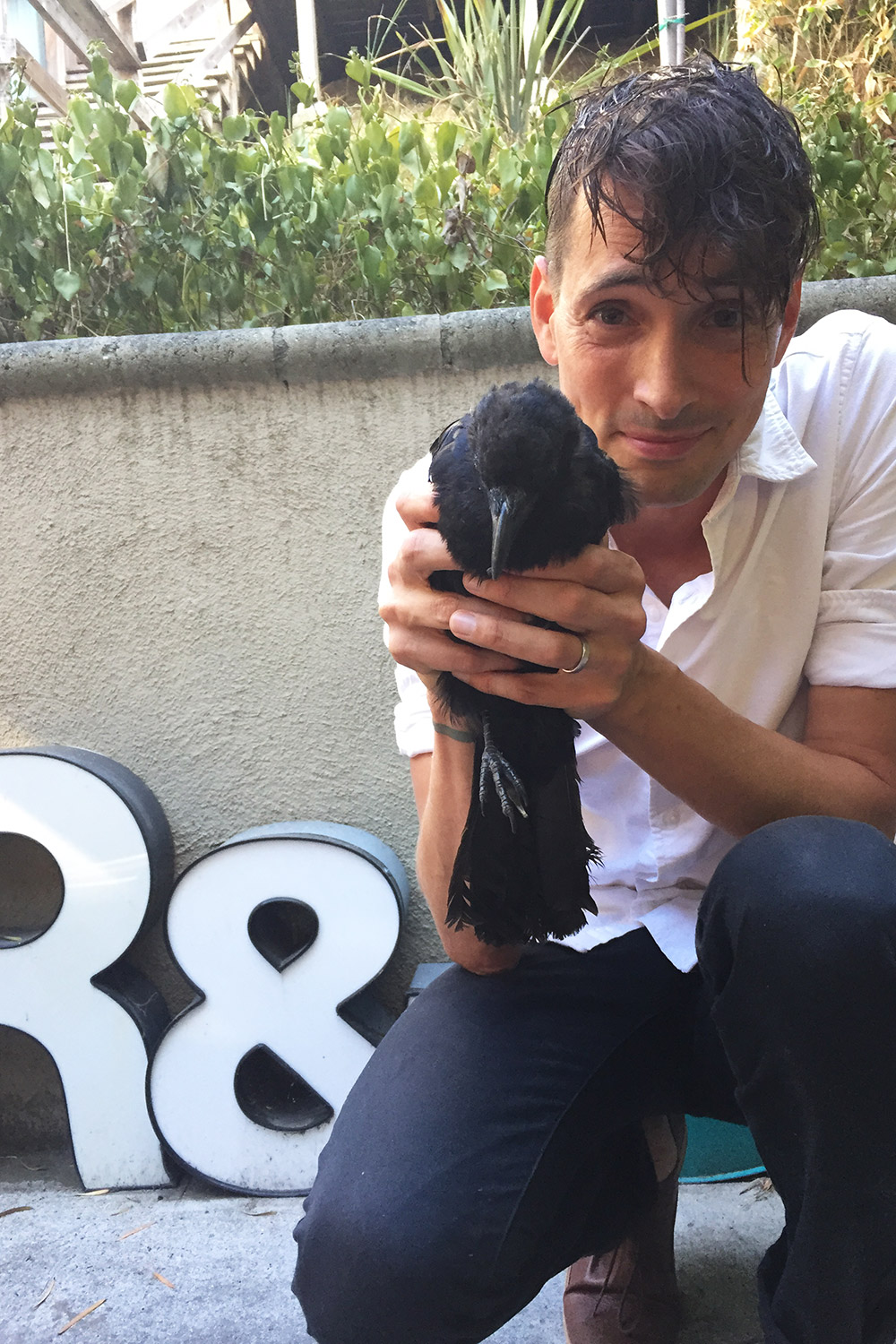
We ran back up to the crow as it gained enough composure to sit upright in the middle of the south-bound lane and were able to wave off the oncoming cars before scooping the crow up and bringing it to the side of the road to better evaluate. Whether it was the crow’s overall affliction or the head-first dive into the street or both, it was out of it, scanning wildly all around and weakly flapping its wings. Carefully, I wrapped my hands around the poor thing and walked it the rest of the way home, over the crest of the hill that divides our canyon from the next one over.

Once home, the crow—who we decided was very lady-like and most probably named Evelyn—settled into a little cave of plants on the embankment by our outdoor office space along with a dish of water and vegan dog food (which she actually ate a bit of). I spent the rest of the day guarding Evelyn from neighborhood cats, checking on her from time to time to make sure she was doing alright, and trying to get through to the California Wildlife Center.

Despite my personal fascination with ravens + crows, I’d never seen or dealt with one this close up and, despite myself, far-fetched fantasies of nursing the crow back to health and having it visit us regularly for treats and little inter-species pow-wows circled through my mind.

In the end though, Evelyn died in the back seat of our car nine or so hours after me first finding her. We were sitting in front of the home of the very kind CWC Animal Care Coordinator who’d offered to take her in for the night when she…just stopped moving. Denys, from CWC, said it was most likely West Nile Virus, which is transmitted via mosquito bite and seen a lot in large birds this time of year. It attacks the central nervous system and wares them down from there. He thanked us for caring and we brought Evelyn’s body back to our house.

We just buried her in our front yard, with a little flower on top and seeds scattered all around her headstone. I’ve got no moral, no advice for anyone else who finds animals in need of help other than: Help. I wish I could have helped more, as always. But maybe there’ll be sunflowers there one day.

This Friday, Katie + I are hosting a longtime friend in the vegan scene at MooShoes Los Angeles—NYC’s Joshua Katcher, editor + founder of the ethical Web journal, The Discerning Brute, adjunct professor of fashion at Parsons The New School, and founder + creative director at Brave GentleMan, a high-end, sustainable, and ethically-made men’s collection offering a fusion of future-textiles and centuries-old production methodology. Joshua will be holding a pop-up at the store from noon on Friday, featuring men’s suiting, outerwear, and more and we’ll be holding a cocktail reception afterwards at 7PM. You can find out more and RSVP via Facebook. In the meantime, we wanted to sit down and catch up with Joshua about the strides he’s made in men’s ethical fashion in the past years, the movement in general and how it’s changed, and challenges he’s faced in bringing all this work to bear.

raven + crow: Alright, first off, for those of us who don’t already know, how and when did you start Brave GentleMan? When you + I first met, you were just doing the Discerning Brute. That seems like quite the leap, from commentator on and appreciator of fashion to actual producer of it.

Joshua Katcher: One led to the other! While I was writing about fashion, I started to realize that there weren’t any brands out there making the styles and quality of garments and accessories I would like to purchase. When I reached out to Novacas to see if they’d collaborate and they said yes, I was thrilled! It was a dream come true to be able to take the ideas in my head and see them created in physical reality, and people responded so positively! Brave GentleMan customers are awesome. They are smart, creative, and willing to invest in something that is better quality because it lasts longer, it finances a value chain that they want to see flourish—from fair labor practices to innovative and sustainable vegan materials.

So the spark was mostly a simple lack of ethical, sustainably made high-fashion for men in the market as it existed then.

Yes, in 2008 most of the ethical/sustainable lifestyle market was geared toward women (which is another issue we could discuss). And there was a stigma that ethical and “eco” clothing was an aesthetic, and that aesthetic was hippy-dippy, crystals-and-incense. The fact that classic menswear aesthetics can be made with ethical and sustainable materials and methodologies was confusing to some people. So yes, there was a lack and I hope to be filling that void.

You’ve termed many of your material things along the lines of ‘future-wool’ or ‘future-leather’ or ‘future-suede’—it’s a beautifully optimistic sentiment, to think that the future of the world’s textiles would not involve killing and abusing animals for their skins and wools. Do you sincerely think these animal-friendly materials really are the future of textiles or is it more positive thinking than predictive?

The scientific reality is two-fold: On one had we have to come to terms with the fact that industrial animal operations—whether it’s wool or leather—are the single greatest cause of the worst environmental problems. We are reminded of this every year by leading experts from the United Nations. We will be forced to find better ways of making everything.

On the other hand, we have the most visionary, exciting innovations in materials happening in the realms of biofabrication, culturing, biosynthetics, bioplastics, recycled materials, and high-tech, high-efficiency, closed-loop synthetics. Scientists are now able to grow most animal materials in the laboratory, and the future for materials looks more like a beer brewery than a cotton field or factory farm. And the best part is that these materials will be superior in every way: Endlessly customizable, far less ecological impact, no animals bred and confined or trapped and killed. There are already materials like biosynthesized spider silk being produced at scale, ready for market without spiders involved in the process. The future is bright and the fashion industry, while deeply entrenched in relationships with old-fashioned animal material suppliers, will either change or become irrelevant when replaced by these visionary innovations.

Can you speak more to the environmental sustainability of animal-free products as they exist now? We encounter people often who take issue with faux leather or the like because they’re worried it’ll sit around in a landfill after they throw it out. Likewise, animal cruelty notwithstanding, others claim that it’s more sustainable to buy one pair of boots made from animal flesh that’ll last them a lifetime than it is to cycle through a pair of cruelty-free boots every few years. What do you say to those particular arguments.

This is a really important question, but requires a long answer! People who think modern synthetic textiles have more of an environmental impact than animal skins are simply wrong, and they are likely victims of really expensive marketing and lobbying from the powerful livestock industries. I find that there are five major misunderstandings with those who take this line of reasoning:

  1. Assumption one is that animals are “natural” and therefore, the turning of their body parts (that would otherwise decompose) into textiles is “natural”. The truth is that the livestock industries represent the single greatest cause of the worst environmental problems and that’s a fact backed by a lot of respected scientific research coming from places like the United Nations Food and Agricultural Organization. So that means things like wool and leather are responsible for the most major ecological and climate impacts before you even get to the tanning, dyeing, shearing or milling processes.
  2. The second assumption is that animal industries don’t use petroleum and synthetics themselves, when in fact, they use tons of the stuff. A leather boot usually still has a synthetic sole and many wool, fur and leather garments are lined in synthetics like polyester. There was a time when leather was tanned with urine, feces and brains, but with modern day tanneries, especially those where most of the worlds’ leather is produced, like those in Bangladesh, the sheer amount of solid and liquid waste full of dangerous chemicals that are dumped into waterways is mind-boggling. During the tanning process at least 660 lbs of chemicals (lime, salt etc.) are added per ton of hides. Bovine leather alone results in roughly 4.2 billion lbs of tanning chemicals used annually. That’s the weight of almost six Empire State Buildings of chemicals. Tanning results in large volumes of effluent contaminated with toxic compounds including aluminum, chromium sulphide, and caustic soda. Most of these are used in countries with very poor and unenforced environmental regulations (which is why it can be made cheap), but it takes a devastating toll of the people, animals, and especially the local waterways. Skin was designed by nature to biodegrade. Synthetic chemicals preserve it.
  3. The third assumption is that things like leather are a “byproduct”, when in fact it’s a co-product. This is a really important distinction, because these tanneries aren’t simply making use of something that would otherwise be thrown away. They’re capitalizing on one of the most profitable aspects of the livestock industries, a co-product without which many cattle operations would lose serious profits and go out of business.
  4. The fourth assumption is that things in the past were better when it came to turning animals into clothing. But even in previous centuries, the demand for animal materials for fashion had massive impacts, driving many species to extinction like the Huia and Carolina parakeet, hunted to extinction for the feather trade; the toolache wallaby, sea mink, Quagga and Great Auk who were hunted to extinction for their pelts; and the Falklands Island wolf and Tasmanian tiger who were exterminated as “pests” to protect sheep herds.
  5. The final assumption is that synthetic is bad. This is simply marketing. Synthetics will continue to get more efficient, more sustainable, more customizable and more biological, while raising animals for materials can’t change that much aside from cramming more and more animals into smaller and smaller spaces and chopping them up faster. Scientists in Japan figured out how to make lycra from waste molasses and poly from bioplastic or mechanically recycled bottles. Synthetics will always be getting more visionary and this isn’t 1970 where PVC and other crappy, toxic products define “synthetic”.

Wow. Thank you. Even for someone already in the fold, so to speak, that’s all quite enlightening. Back to Brave GentleMan and your mission for the company, can you speak to each facet or product a bit? Its’ definitely evolved and grown over the years, in terms of products you offer.

My goal for BraveGentleMan is to become a full lifestyle brand that continually—but of course with high editorial standards—expands into more product categories. For now we offer ready-to-wear (RTW) suiting, shirting, outerwear, shoes, boots, soap, hats, belts, and wallets.

What’s the most exciting product you make now, for you?

I love our suits. That was my original dream, to make a vegan suit, and it’s still my favorite thing to do. Suits are a complicated thing!

I can only imagine. Speak to the challenges you’ve encountered in creating and growing Brave Gentleman over the years. It’s got to be quite the task, for instance, to deal with materials factories in Italy for the first time or even just communicate the desire to people outside of the vegan realm why you don’t want sheeps’ wool or animal hides involved in your products.

I’ve heard, “Vegan clothing? What are you going to eat your shirt?”

OH MY GOD, we get the ‘So you can eat the shoes…heheh’ thing CONSTANTLY at MooShoes. It continues to get even older.

People think vegan means food, and that’s just evidence of the larger problem that fashion is not taken seriously in academica, politics, or elsewhere. It’s seen as trivial, but has massive, global impacts on workers, animals, and the environment.

Where to begin though?! I stopped working with a tie-maker because he absolutely refused to understand that I would not use silk or wool, no matter how patiently and clearly I explained it (and I’m a educator, so I know how to communicate). Then I had about five consecutive suit factories tell me I’d never be able to make vegan suits, and I should just quit now because even cotton and linen suits have wool interlining, silk thread, horsehair canvas, and other things that they were not willing to take the time to replace for me. I spent years doing research and development, endlessly searching for sustainable, vegan fairly-made materials that would make superior suiting. At this point I even have to make my own custom shoulder pads from recycled poly batting, made from soda and water bottles. The people who are the most confused, however, are the people who don’t understand that I am not willing to use a foreign sweatshop or cheap, toxic materials in order to decrease my costs and increase profits. I have two bottom lines, one is financial and one is ethical, and I have to work at making both of them a priority.

Well-put. Not to date ourselves, but you + I have been doing this for a while now. How have you seen the vegan scene change over the years, both in terms of food and the like and in the larger realm of fashion itself.

I love getting older! I’m 34 and I’ll be 35 in October, and I’ve been vegan since I was 18. I think what’s changed the most about the vegan scene is that now it’s not just an “alternative” for avoiding things, but it’s become aspirational from the standpoint of aesthetics and taste. I mean that in the sense that some of the most exciting innovations in cuisine, fashion, and the arts are coming from a value set that is vegan. Vegan is being redefined and equating to high-quality, and that’s a really major transformation.

So true. Like you said, it’s no longer hippy-dippy crystals and hemp, it’s finally being (more) recognized as a product of values and something that can be done with ethics and taste. I know, you’re serving as an Instructor of fashion at Parsons The New School these days. How did that come about?

I’ve lectured at several universities on the topic of fashion and animals; when I spoke at Parsons, an existing professor there recommended me and I was hired as a part-time instructor. I ended up becoming an expert on this topic and I am almost done with my book about it!

That’s very exciting. Anyone who’s been vegan any amount of time has done their fair share of educating others on the whole how, why, what…how is it for you, serving the role of educator more formally now?

It’s really exciting and challenging to continually be refining the way I’m communicating these ideas to students. I’ve learned more from teaching than I have from anything else, about being effective.

That’s excellent. And, in addition to having a Brave Gentleman pop-up at MooShoes LA while you’re in town, you’re also part of a larger panel that’s happening tonight on vegan fashion and sustainability. Can you tell us a little bit about what you all will be discussing there and who else is involved?

I’ll be on a fashion panel that PETA has organized along with Leanne Mai-ly Hilgart (Vaute), Stephanie Nicora (Nicora Johns), Rebecca Mink (Mink Shoes), and will be moderated by Taryn Hipwell (Ecodivas, FIDM). The topic of discussion is Vegan Fashion + Sustainbility and it’s at the Pyo Gallery LA, 1100 S. Hope St., #105 (near the intersection of S. Hope Street and W. 11th Street), in Los Angeles. Doors open at 6:20 p.m., program from 6:40 p.m. to 8 p.m. Only 100 people can fit in the space, so people should RSVP on the FB event page quick!

Done and done. Thanks so much for talking with us, Joshua—see you soon!

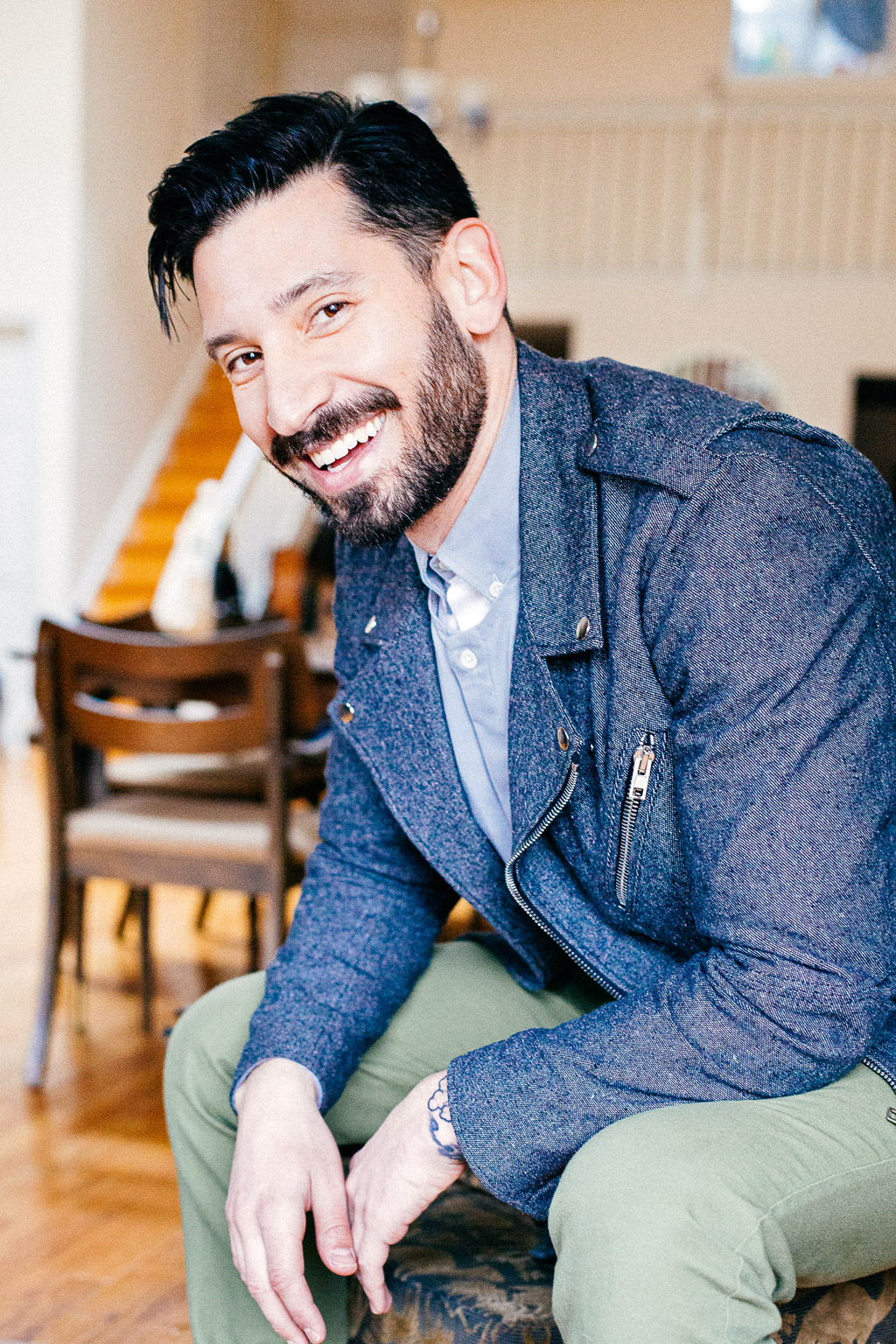
Below, the Brave GentleMan Tweed Moto Jacket, on of the many items Joshua will have on-hand at the pop-up Friday. He’ll be at MooShoes LA from noon on Friday to 6PM, followed by an after-hours evening reception starting at 7PM and featuring specialty cocktails from Mateo Hoke, Chief Cocktail Editor at Millennium Restaurant in Oakland and selections from Los Angeles’ Vromage vegan cheese shop. RSVP via Facebook.

Photos of Joshua above + to the right by Julia Cawley.
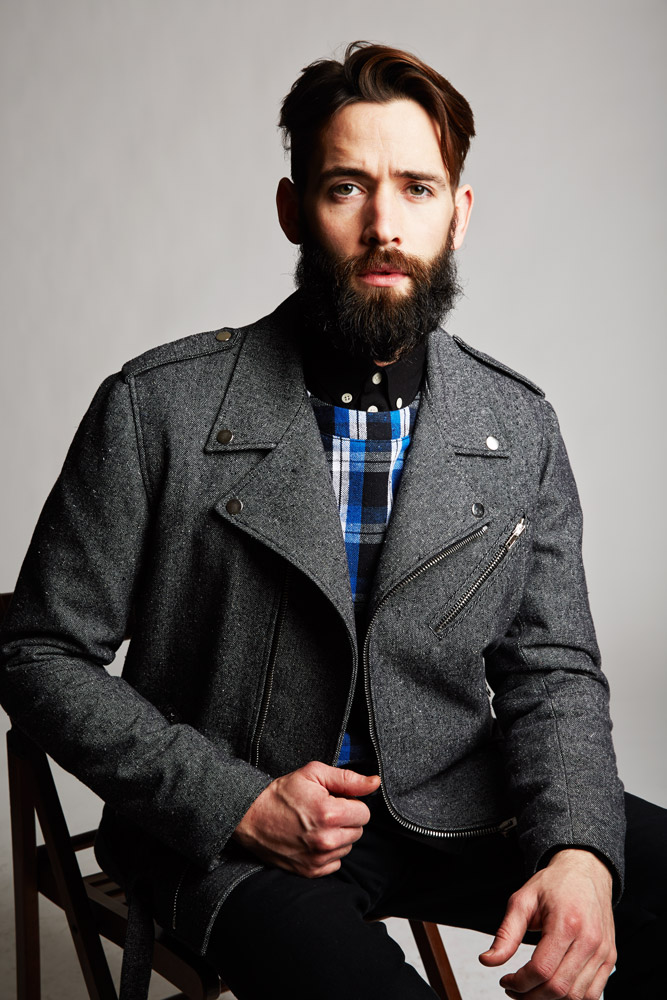
 

BraveGentleman-Shot10-Portrait-038

Late last month, I received a cryptic text from Mud Hen Tavern co-owner, Chef Kajsa Alger: “Hey Troy! We’re opening a new thing. Wanna send you an invite….”

Well, I like new things AND invites, so that was an easy sell.

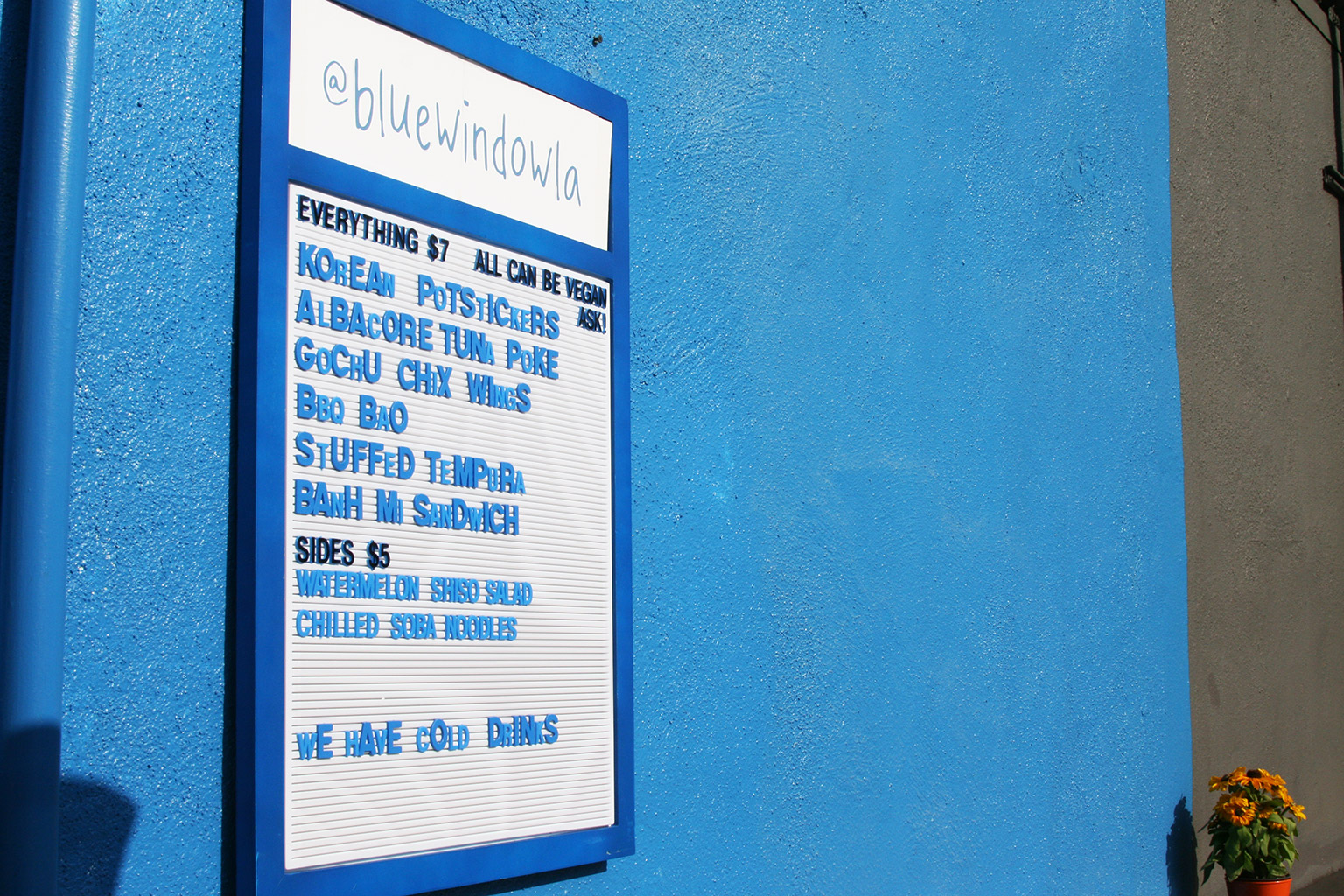
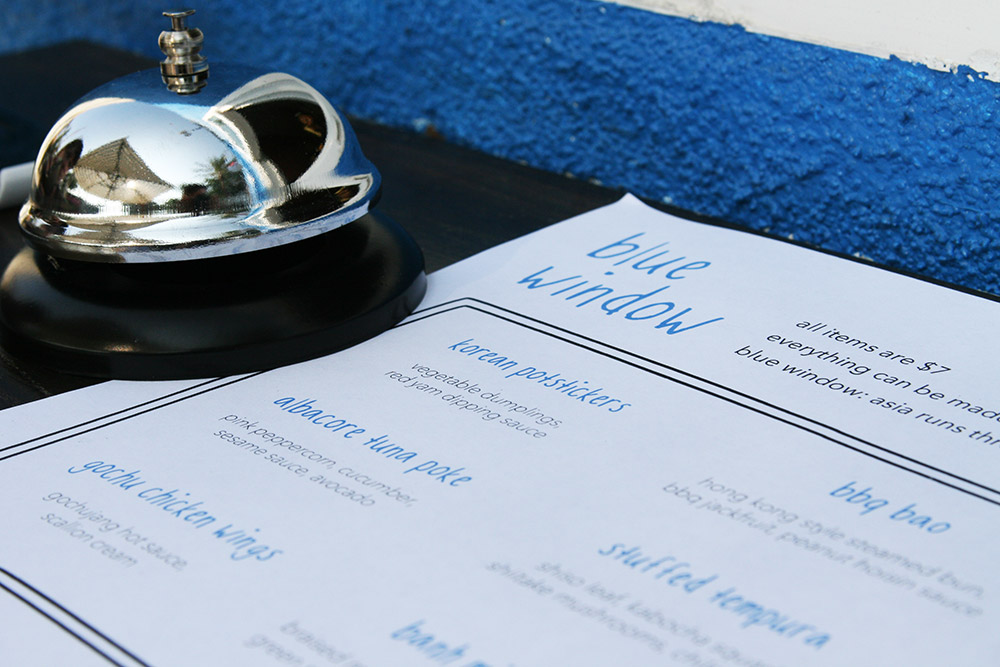
This evening, Katie + I experienced a preview of that very new thing—Blue Window, a new take-out window adjacent to Mud Hen that will offer up quick gourmet take-out food at non-gourmet prices (everything’s seven bucks or less), with menus + cuisine rotating every six months. First up, Blue Window: Asia.

For anyone who remembers and misses Mud Hen’s previous incarnation, Susan Feniger’s STREET, Blue Window is an exciting addition to Los Angeles’ already vibrant restaurant scene, essentially taking STREET’s rich street food concept and condensing it into this new, modular, bite-size format. The Blue Window team expands on the idea in their press release for the new venture:

“As avid travelers and global cuisine addicts, co-owners Susan Feniger and Kajsa Alger have been keeping their eyes open for a new opportunity to bring international street food back to their neighborhood. As time went by, they realized that the best way to do it would be to bring it back to the kitchen where it all started…a small take-out window from their original restaurant, STREET. A tiny window, a counter, and all of those addicting little street bites that everyone craves. With a menu that only lasts six months, Blue Window is all about getting your fix in while you can.”

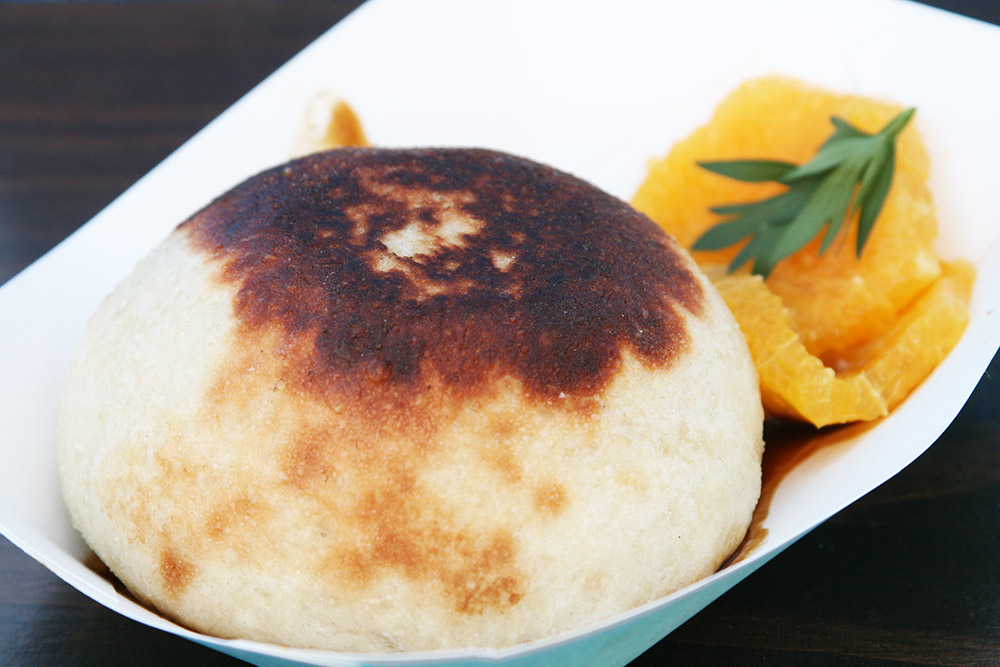
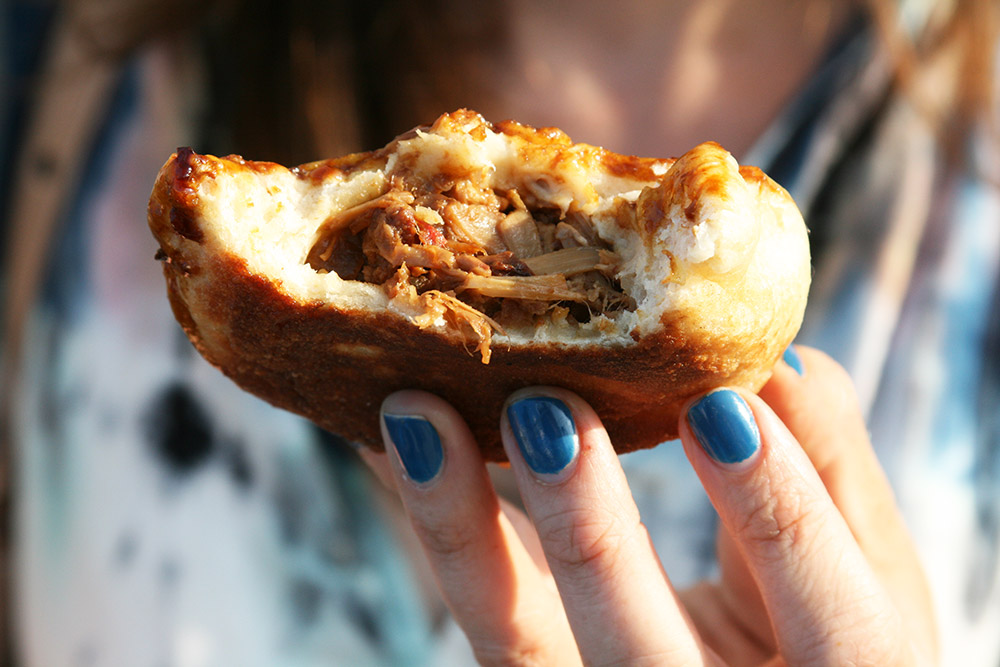
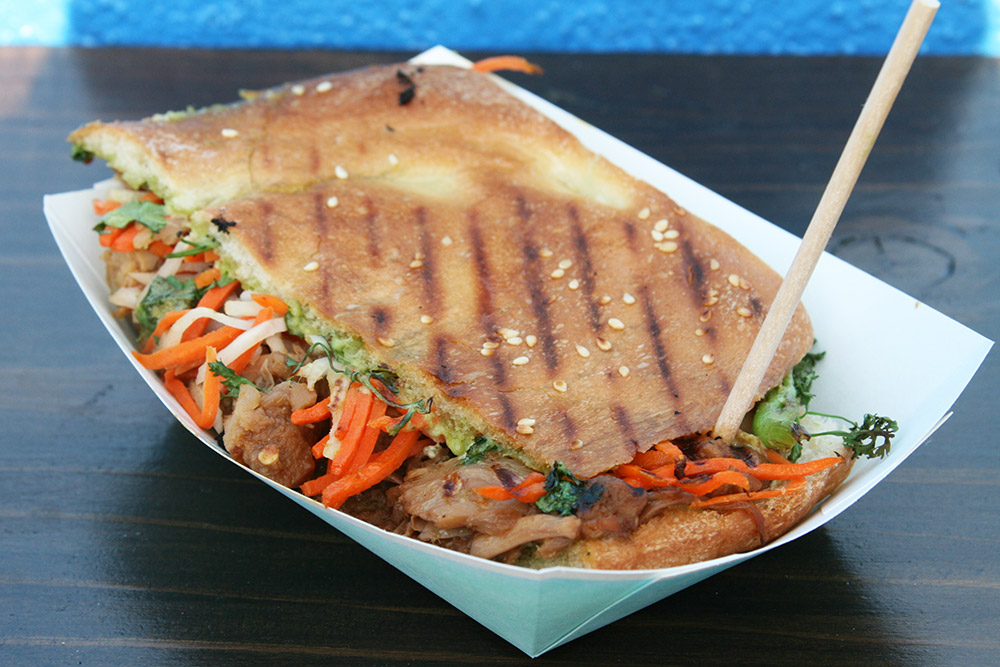
We love Mud Hen’s menu, embodying the more neighborhood pub-like, less global street cuisine interpretation of Susan + Kajsa’s cooking, but we’ve long-missed many a STREET menu item. Blue Window promises to bring some of those favorites back, starting with the BBQ bao, which, in its vegan version, exists as a light, puffy steamed bun filled with barbecue-soaked jackfruit and topped with peanut hoisin sauce.

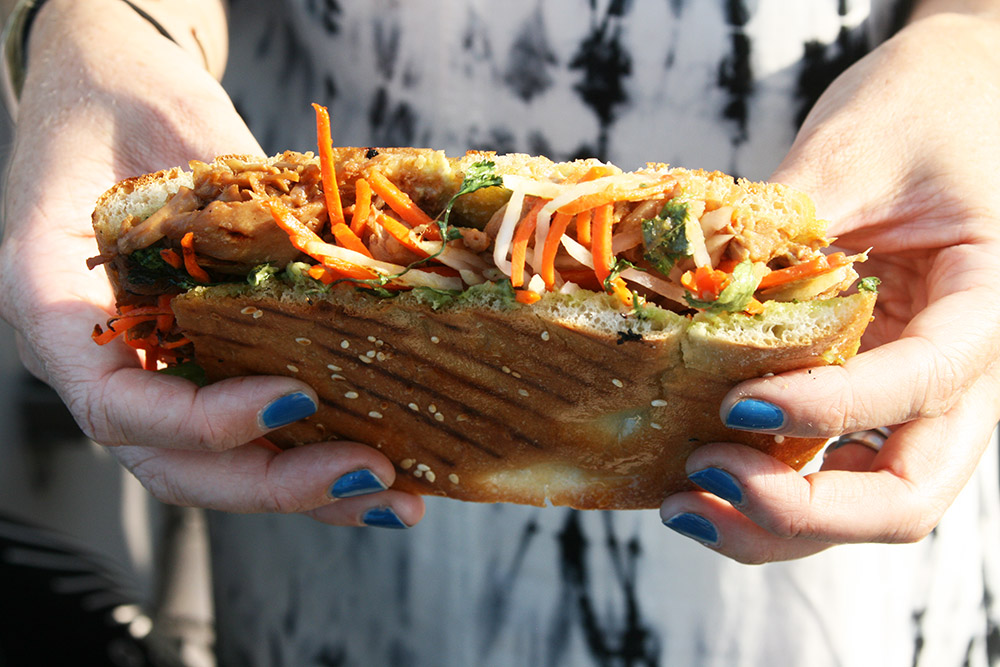
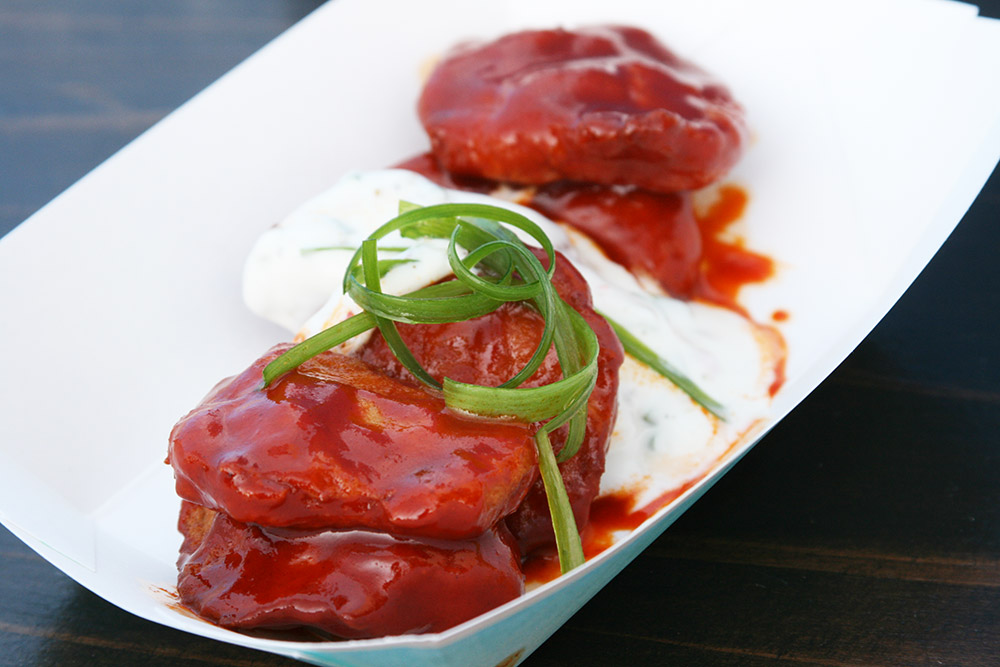
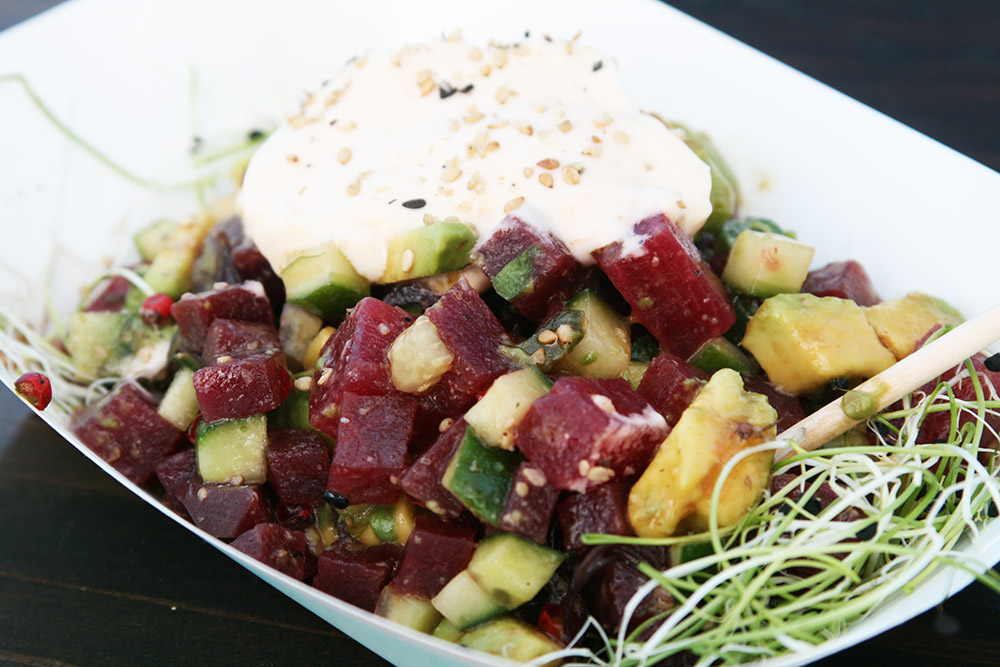
And the bao’s not alone in its vegan incarnation—every single menu item at Blue Window is veganizable or has a vegan version, from the gochujang hot sauce wings (which swap in vegan soy chicken) to the albacore tuna poke (which employs a pickled daikon instead of fish) to the vegan version of the banh mi sandwich, with its grilled bread, pickled vegetables, green sriracha aoili, and marinated jackfruit.

All of it’s absolutely delicious, believe us—not only did we try nearly every single item on the menu, we were also literally the first ones in line Friday evening. That damn New York timeliness hasn’t quite been bleached out of us by the Southern California sun, it seems.

Blue Window opens officially Monday, with weekday hours from noon to 10PM. The concept will change after February 2016, so get this goodness while you can.

For anyone interested in hearing more about Blue Window’s forebear, STREET, you can read a 2013 interview we did with Kajsa, focusing on the strong vegan predilection that restaurant shared with this new concept.

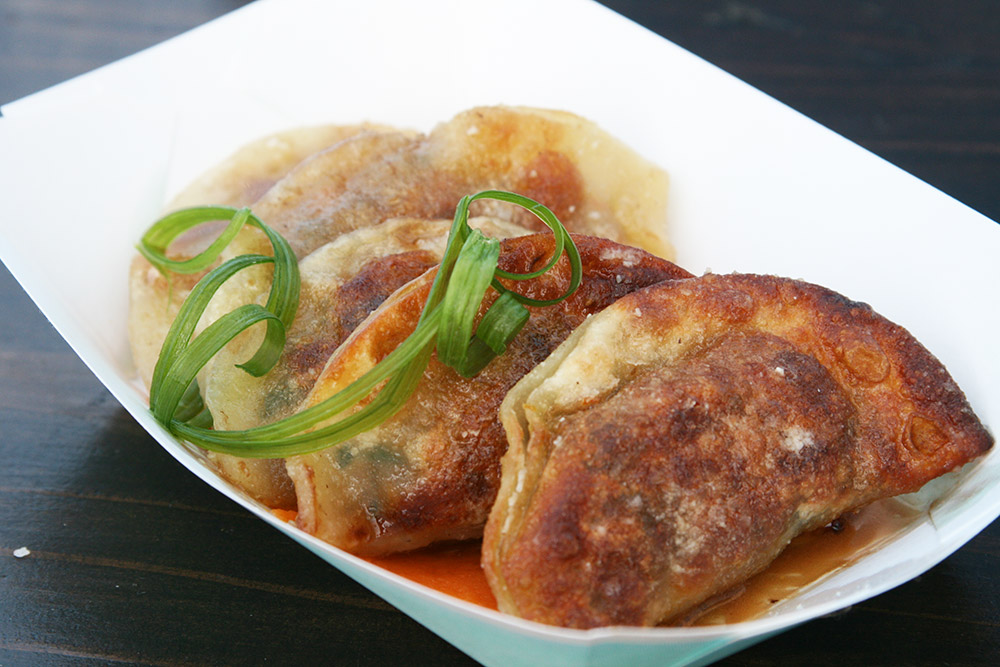
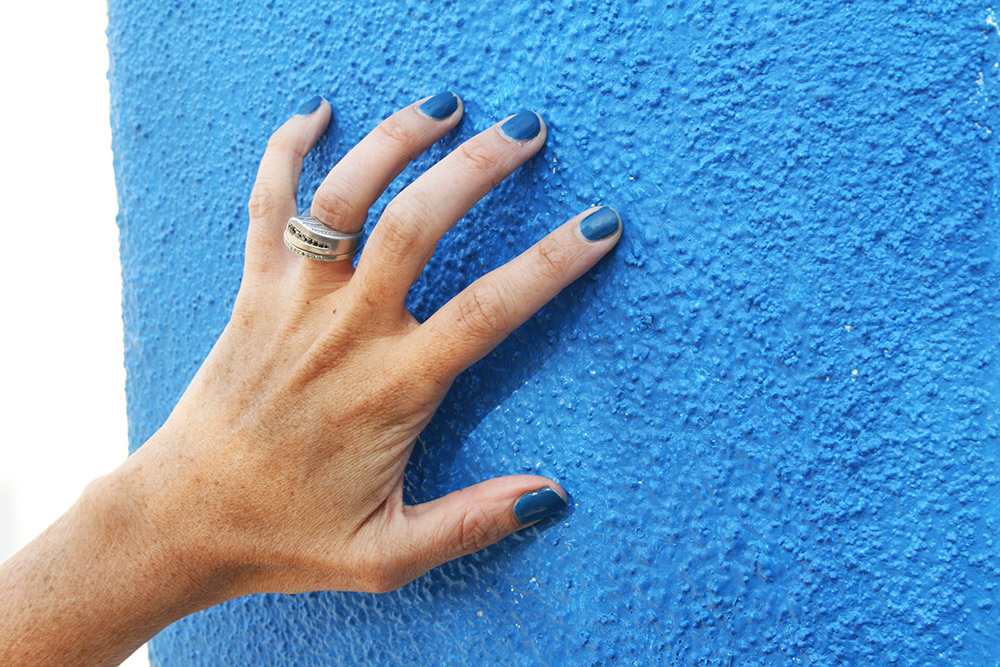
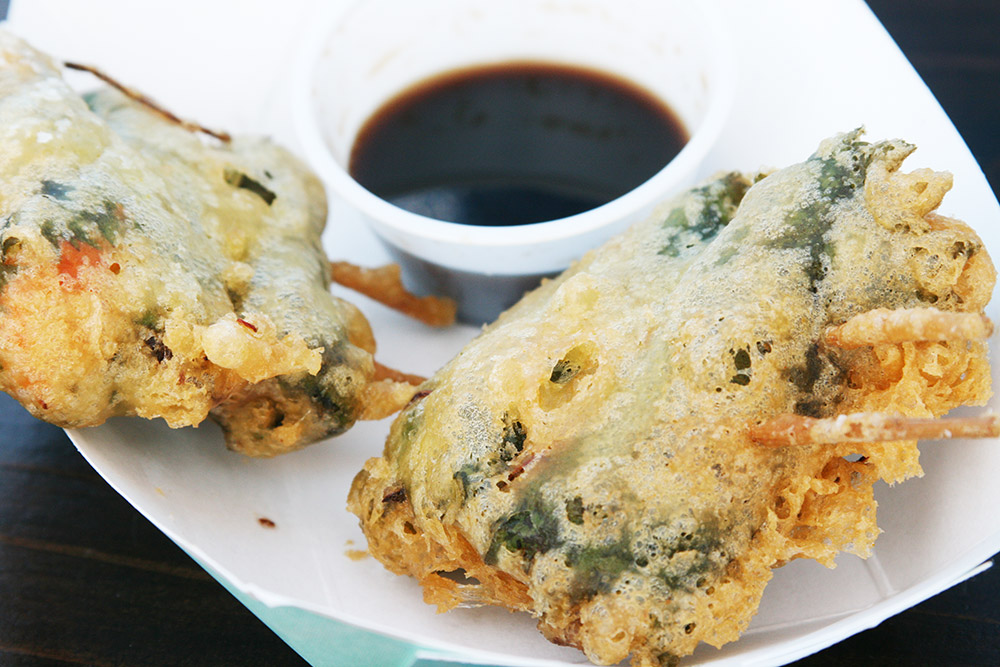
Below, a couple shots of the legendary BBQ boa; a couple the excellent grilled bank mi; Blue Window’s menu (which can be seen in full on Mud Hen’s site); Korean potstickers with red yam dipping sauce; the gochu soy chicken wings with vegan scallion cream; blue nails for a blue window; stuffed tempura—another favorite of ours, full of beautifully tasty shiso leaf, kabocha squash, shiitake mushrooms, and chile thread; the vegan version of the albacore poke; and Katie enjoying the very first official bite of Blue Window. Very much.

Oooh—and not pictured but very much worth the six bucks—Thai iced tea, with the Window’s rich, house-made condensed coconut milk.

Photo-raven+crow-studio_8127 Photo-raven+crow-studio_8150 Photo-raven+crow-studio_8145 Photo-raven+crow-studio_8155 Photo-raven+crow-studio_8115 Photo-raven+crow-studio_8146 Photo-raven+crow-studio_8129 Photo-raven+crow-studio_8117 Photo-raven+crow-studio_8136 Photo-raven+crow-studio_8134 Photo-raven+crow-studio_8139

During our adventures in the American West last week, we visited the highly esteemed and oft-recommended Japanese-style mountain spa, Ten Thousand Waves. There, we enjoyed a day of lounging in the beautifully placed hot grand pool, moving every now and then from the warm water to their (very very) cold plunge pool, into the bamboo-and-teak sauna next-door, and back into the grand pool again, giving our bodies a relaxing, therapeutic run of the gauntlet  before checking into some much-needed massage sessions.

I know. Woe is us.

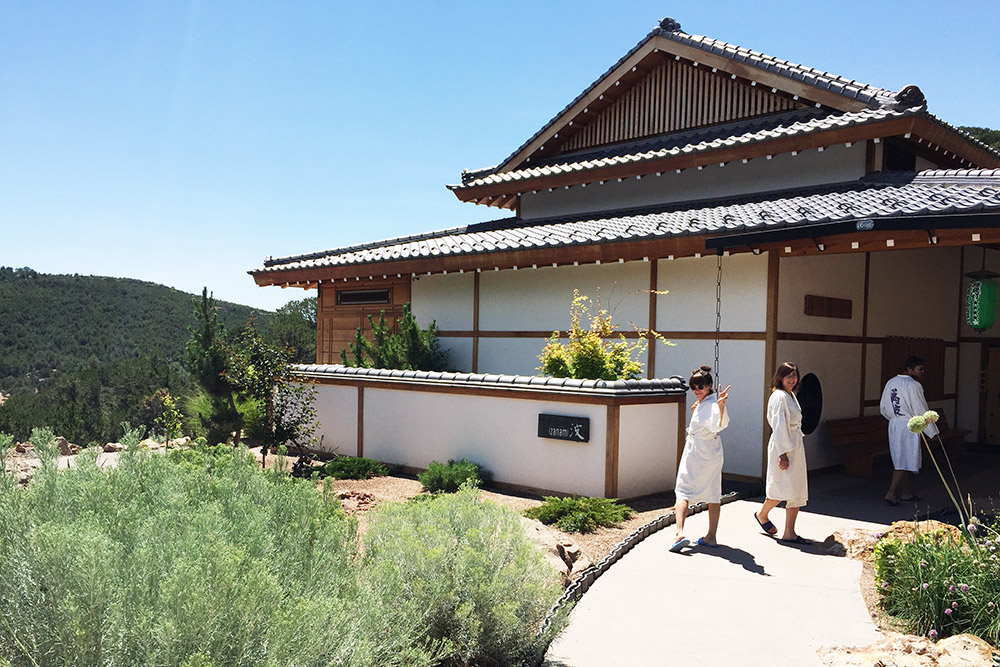
Best of all, in my opinion, at least, we got to visit the spa’s Japanese izakaya, Izanami, with its impressive views of the surrounding mountains, extensive list of libations, and vegan-friendly menu.

For anyone not already familiar with izakayas, they’re essentially Japanese pub-style restaurants that focus on drinks and drinking food; so, less sushi + formality, more quick, shared, rich dishes + fun. Which explains how the trend of Izakaya-style restaurants has spread so quickly in the State of late.

On our visit, we enjoyed some Japanese microbrew beers, a nice flight of rosé, and their daily sake special, which—as they promise on their Web site—trends to the more sophisticated palette with a deeper, less sticky-sweet taste than your common sake.

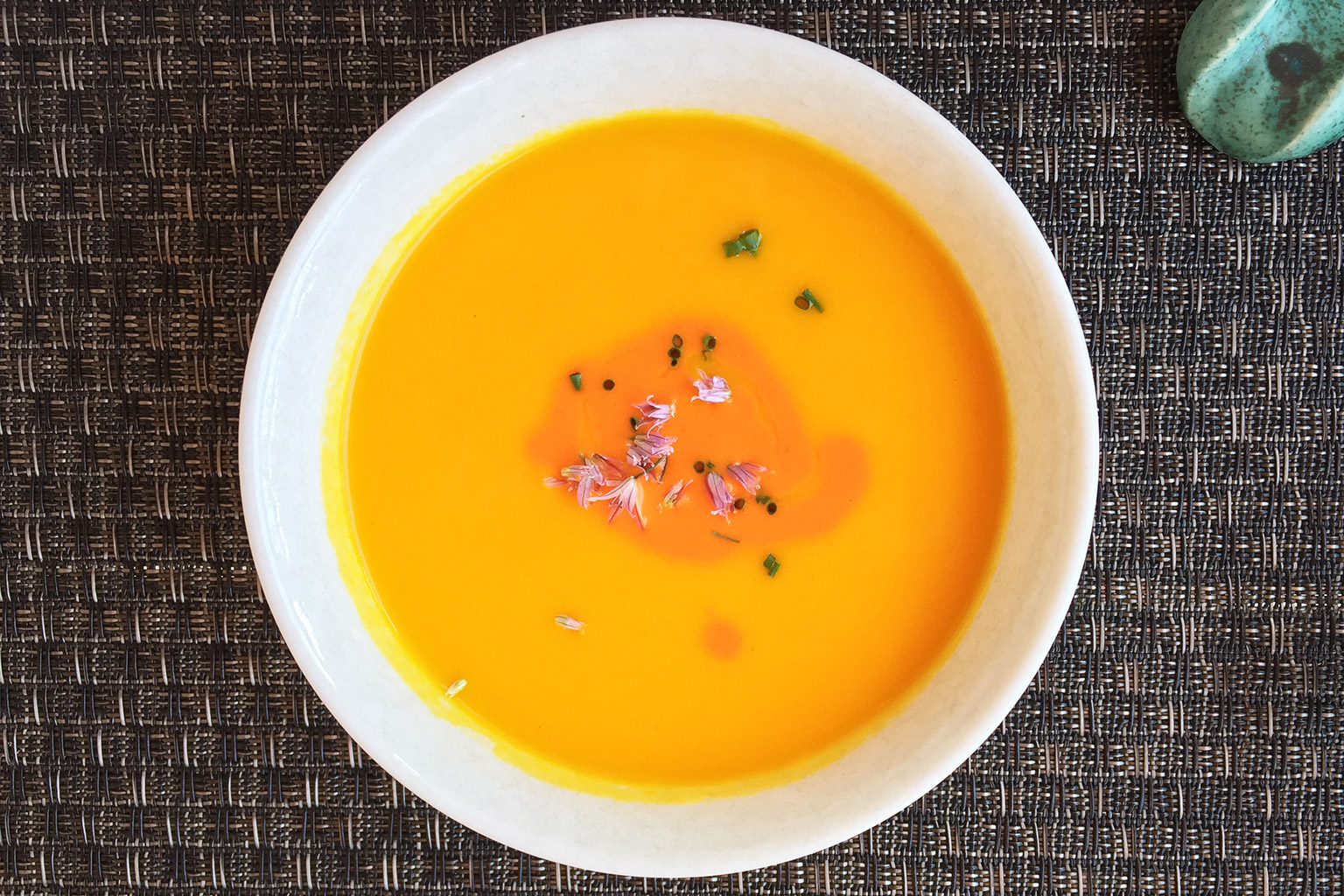
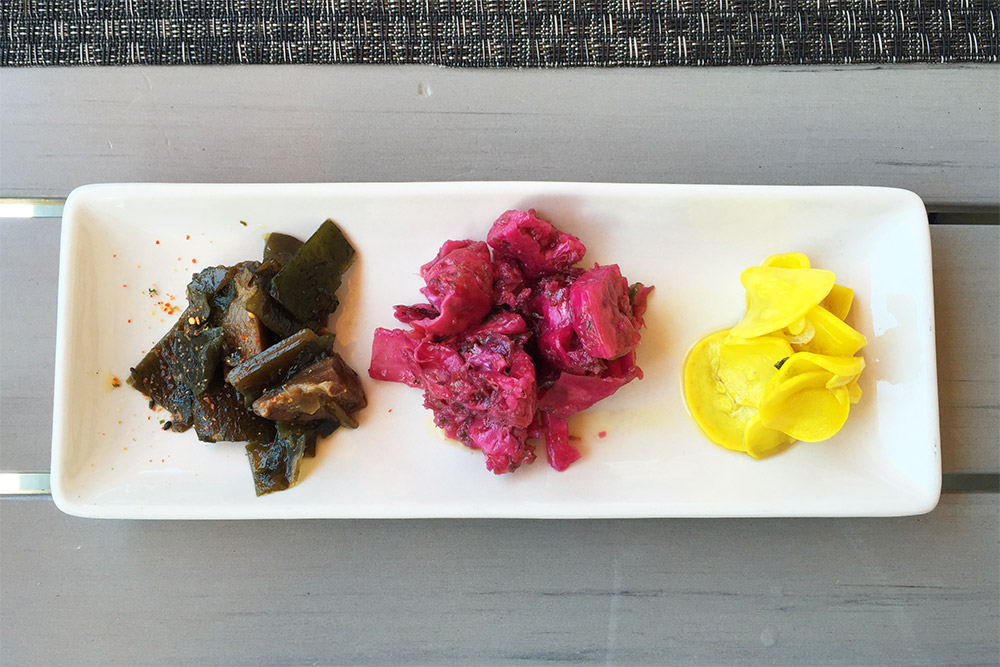
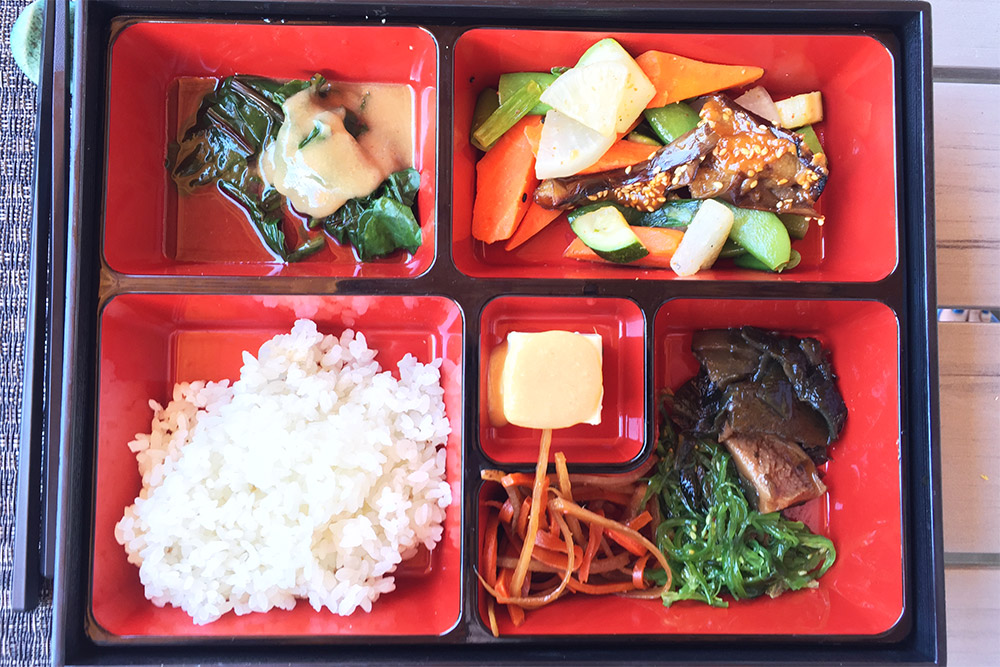
The vegan-friendly food centered around freshly made, simple vegetable-based dishes—like the chilled double soup of puréed carrot + sweet pepper (above); richly togarashi-marinated hot edamame itame; house-made  pickles of seaweed-mushroom, red cabbage kimchi, and saffron squash (below); and the vegan bento box with (below, clockwise from left) wilted spinach with ponzu-sesame dressing, vegetables with sesame-miso sautéed eggplant, additional house-made pickles of mushroom, seaweed, and carrot-burdock, rice, and vegan tofu dengaku.

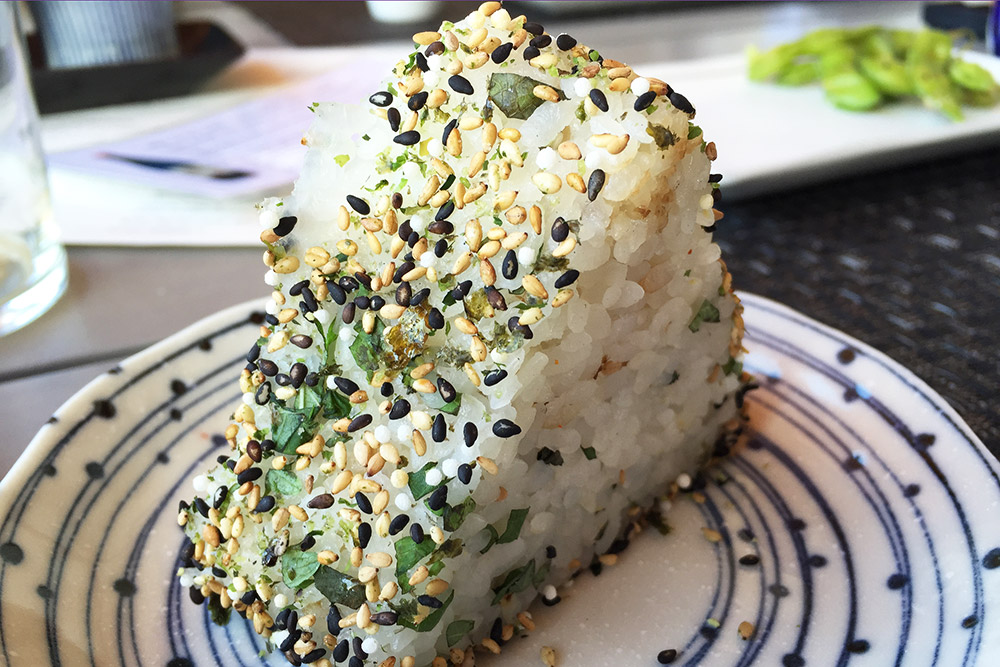
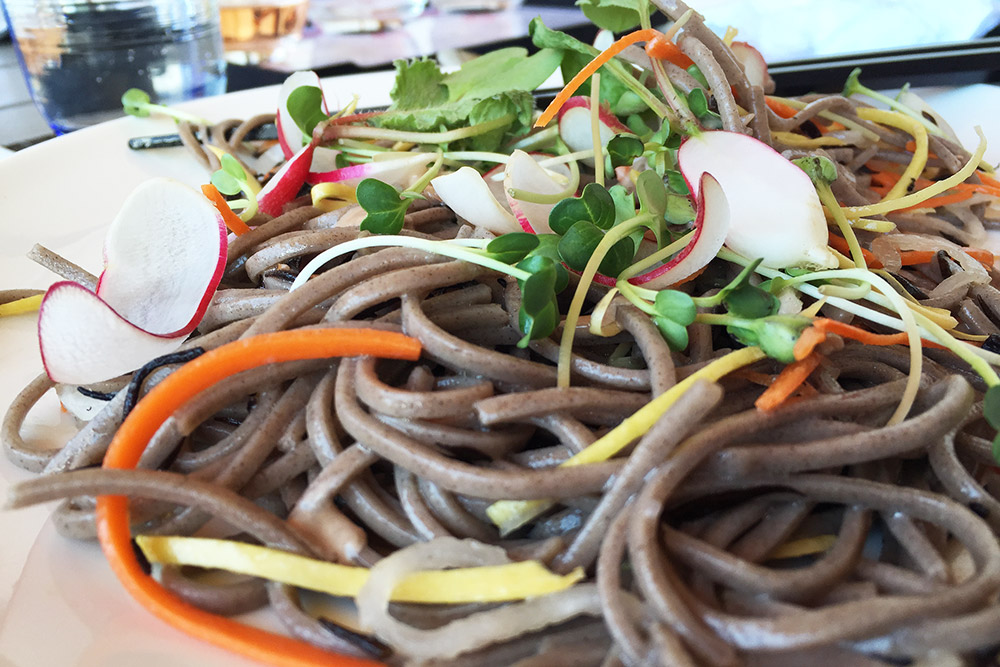
The izakayu also offers a number of rice and noodle dishes, like the surprisingly delectable onigiri rice ball and their buckwheat noodles (both below).

I have no idea if the restaurant’s namesake is in fact Izanami-no-Mikoto—the mythical Japanese goddess of creation and death whose name means “she who invites”—but if it is, it’s very fitting; many would be happy to die after a meal at this inviting, beautiful  establishment. Definitely, if you’re planning a trip to the Santa Fe area of just looking for added incentive to plan a trip, Ten Thousand Waves + Izanami can offer you a lovely day of pampering and wonderful food + drink.

And yes, you can totally eat in your robe. Just watch your sleeve on the soup portion of the meal.

20150817_5247 20150817_5254 20150817_5261 20150817_526620150817_5232

A fond farewell to Santa Fe and its surrounding environs. See you again soon.

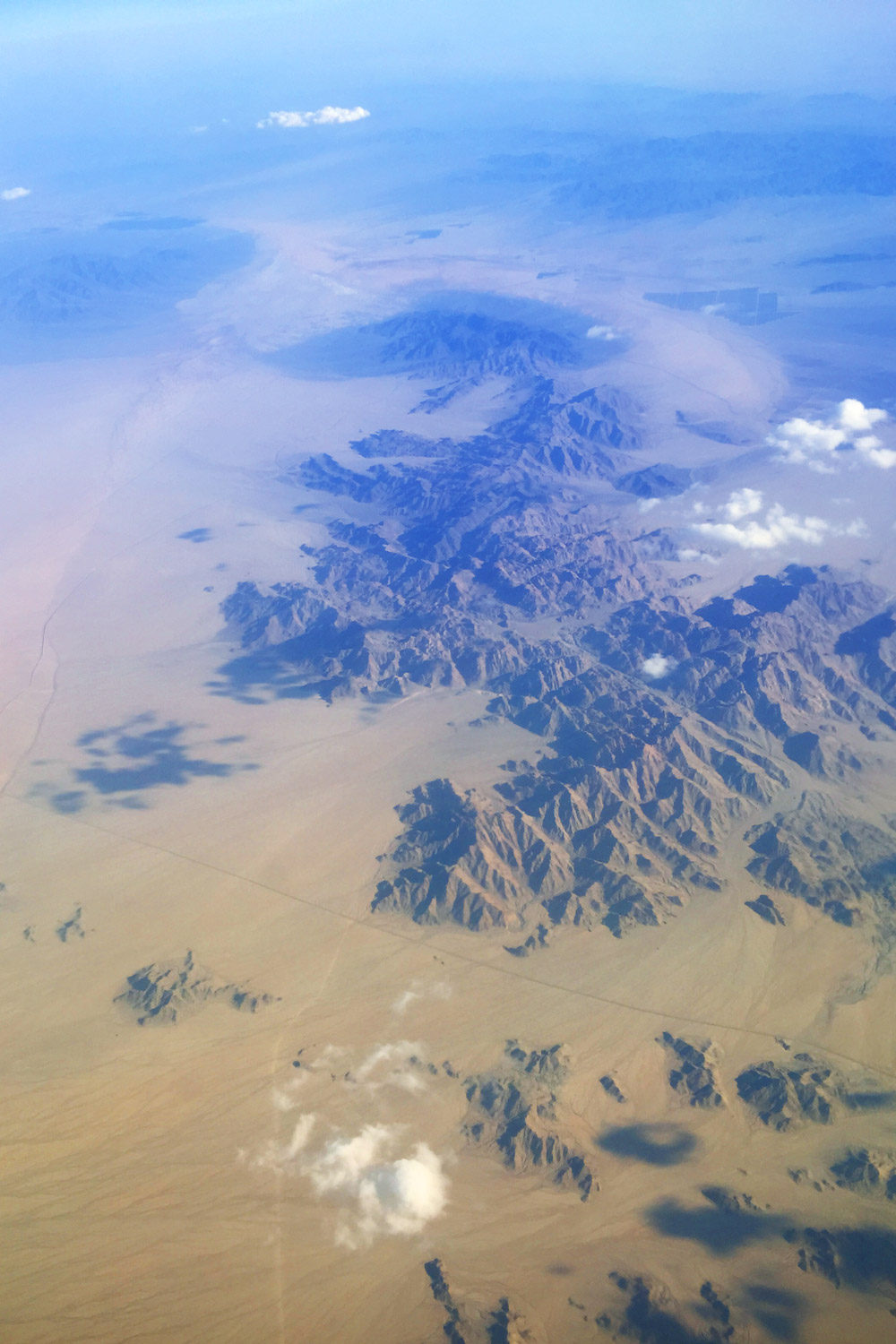
Above, somewhere over New Mexico. Or Arizona. Turns out, those state lines are hard to see six miles up.

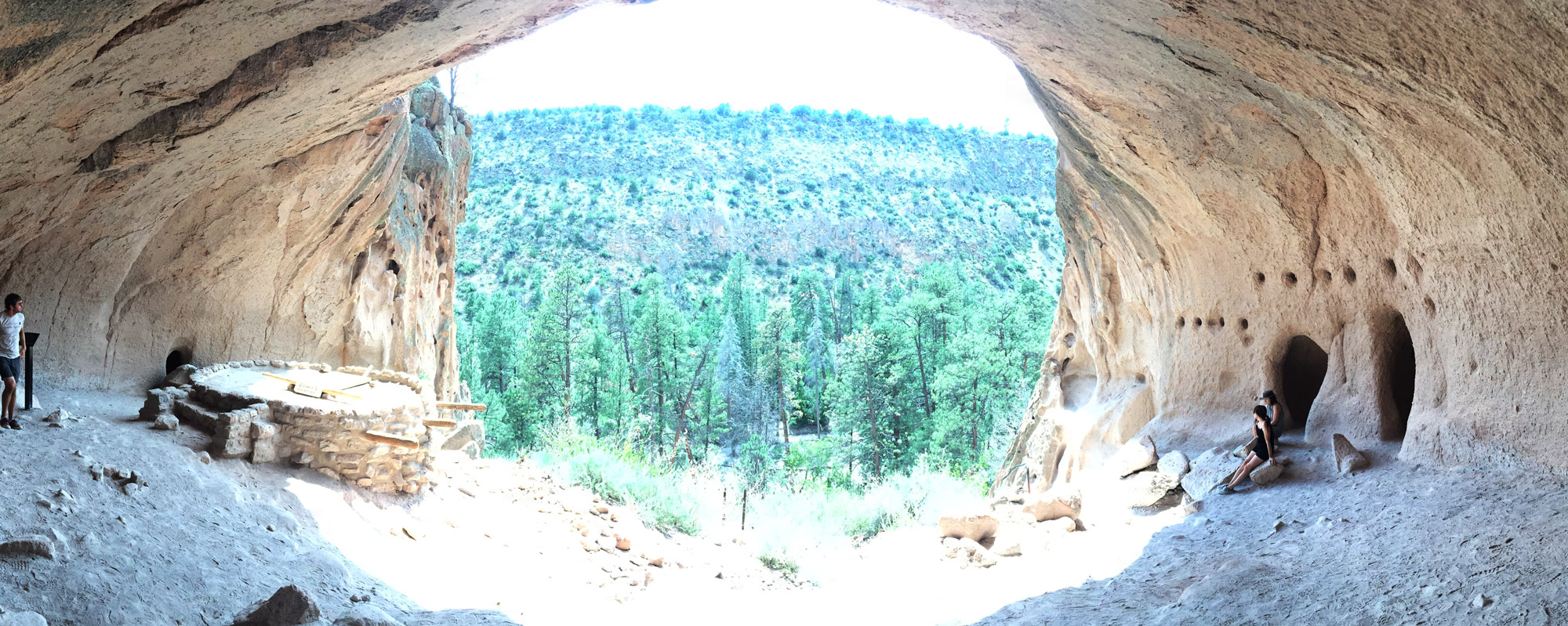
We traveled north of Santa Fe today to visit Bandelier National Monument, “over 33,000 acres of rugged but beautiful canyon and mesa country as well as evidence of a human presence here going back over 11,000 years.”

In addition to the wealth of natural beauty the park holds, it also boasts a rich history, much of which is evidenced to this day by way of ancient ruins, cliffside dwellings, and petroglyphs carved into the soft, sandstone-like volcanic tuff.

We took this shot from Alcove House, a ceremonial cave reached by climbing 140 feet worth of stone stairs and steep wooden ladders that was once home to 25 Ancestral Pueblo people.

Click the image to zoom in; you can see more images from our trip on our Instagram feed.

guestToday, we’re starting a new regular piece that—for now, at least—is called “Please, Explain Sports”. In the content of said piece, we’ll employ our longtime friend and sports fan Hemal Jhaveri—Senior Social Media Editor at USA TODAY Sports Media Group—to…essentially explain sports.

In both my case and Katie’s, neither of us has ever been that into sports in the past. But I’ve had a gradual if not totally uneducated love of soccer grow within me in the past years and, in general, both of us have come to appreciate the wide world of sports much more than our against-the-grain, “ANGRY BANDS AND PIERCINGS ARE MY SPORT!” personalities. Thus this late-in-life education, courtesy of our friend, Hemal.

10150790_10152063856830954_1933715667_nTo the right, the author + Katie posing in Griffith Park like they’re an awesome new TV cop team.

For other…less familiar sports fans out there, we’ve linked through to explanations on a few terms below—I don’t know about you, but I had no idea what a postseason berth was, but it sounded a little gross. And yes, we even hyperlinked team names. I don’t know. Maybe someone, like, just got out of a weird cult and doesn’t know who the Mets are.

Alright, Hemal, we batted a few things around to start off with—see, I can do a moderate sports analogy—but you seem especially stoked on baseball right now. I’ll be honest—and I’m not kidding here—I’ve spent 4-7 innings of the last three baseball games I’ve attended looking for vegan nachos that I don’t think exist at Dodgers stadium. So, enlighten us on this thing you call ‘base ball’.

Baseball, of course! A lot of people will try to tell you that college football, which starts in a couple of weeks, is great, but these people don’t know anything. Don’t listen to them. With about two months left in the season, MLB is where it’s at, and right now, the Mets are occupying a huge chunk of my time and affection.

I’ve been a Mets fan for a long time but what you have to first understand about this team and what makes them so intriguing right now, is that they usually aren’t very good. In fact, they have a well-earned reputation for being comically awful. The Mets are so bad that fans invented the hashtag #LOLMets to describe the team. Trust me, it gets used a lot.

At the start of the season, the Mets looked good, but fans expected the same thing that happens every year—a lot of promise that eventually implodes as the season heads to the final stretch.

But, as of Wednesday, the Mets are leading the National League East (by one game), finished a sweep of division rivals the Nationals and have won five straight games.

This team is actually good! Strong pitching and hot bats have a lot to do with this of course, but it’s been an emotional rollercoaster that pivoted on a crucial few days last week.

About a week ago, with the MLB trade deadline approaching, the Mets set up a trade to ship right-hander Zack Wheeler and infielder Wilmer Flores to the Brewers for center-fielder Carlos Gomez..

Word got out, as these things often do, and Flores found out that he’d been traded from a fan as he walked out into the infield during the 7th inning of a game.

That’s just brutal. Flores, understandably, was crushed and unable to hold back tears as he finished out what he thought was his last game as a Met.

It was gut wrenching to watch. I don’t like to see anyone cry, much less an athlete.

But, in true Mets fashion, the deal fell through at the last minute and Flores got to stay with the team he loved. Which, yay!

But, the story gets better. In their next game, with the score tied 1-1, Flores hit a walk-off home run in the bottom of 12 inning against division rivals the Nationals and won the game. Everyone lost their damn minds. As he ran the bases, Flores kept pointing at the Mets logo on his uniform to show how proud he was to still be a Met.

2200

That’s redemption right there.

No kidding, I almost cried.

The Mets have a beautiful history that’s built mostly on heartbreak and failure. If you’re a Mets fan, you’re not used to winning, just trying hard and falling short.

That’s what makes the last few weeks and the story of Wilmer Flores so compelling. Flores stayed with the club through some pretty lean years, and just like the fans, his loyalty isn’t built on wins but rather shared misery. For better or worse, this was his team.
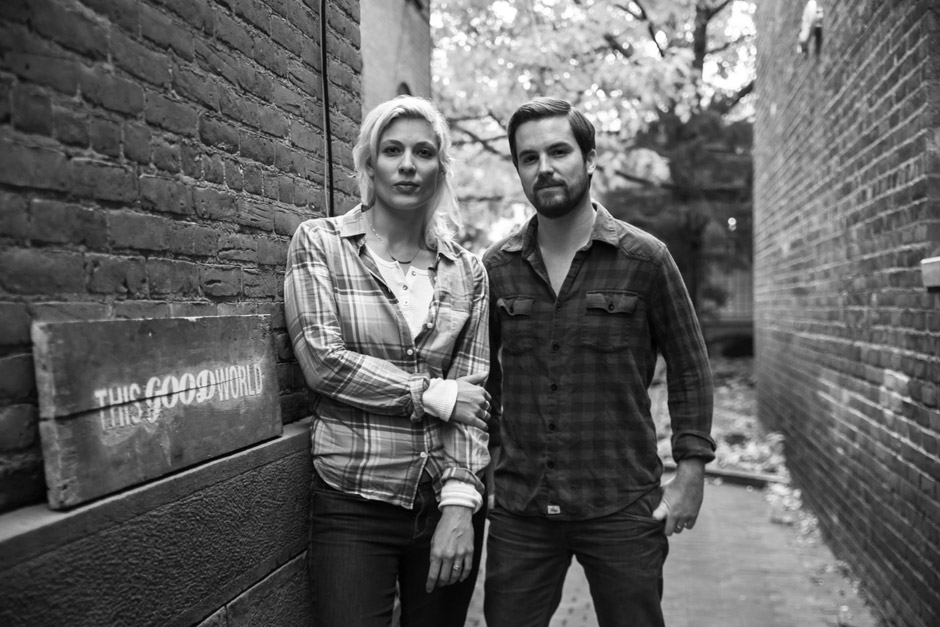
I don’t think you can overestimate how something like that has kind of galvanized the team and the fan base. Since the trade debacle, the Mets are playing with more passion and emotion, and it seems like a postseason berth really is within grasp for the first time since 2006.

Now, with two months left in the season, all eyes are suddenly on the Mets to see if this team is actually for real.

The thing is, they might be. Or they could implode again and miss the postseason but regardless, it’s going to be so much fun to watch. Every game matters and now is a perfect time to hop on this bandwagon.

Hemal Jhaveri is the Senior Social Media Editor for USA TODAY Sports Media, a resident of the District of Columbia, and, above all else, an awesome person. In the past, she’s worked as Executive Director of Digital Innovation at Politico, Executive Producer at AOL, and—many lifetimes ago—was a student in a Geology 101 lab I TA-ed. Feel free to contact us if you have any sports-related questions you’d like Hemal to tackle.  

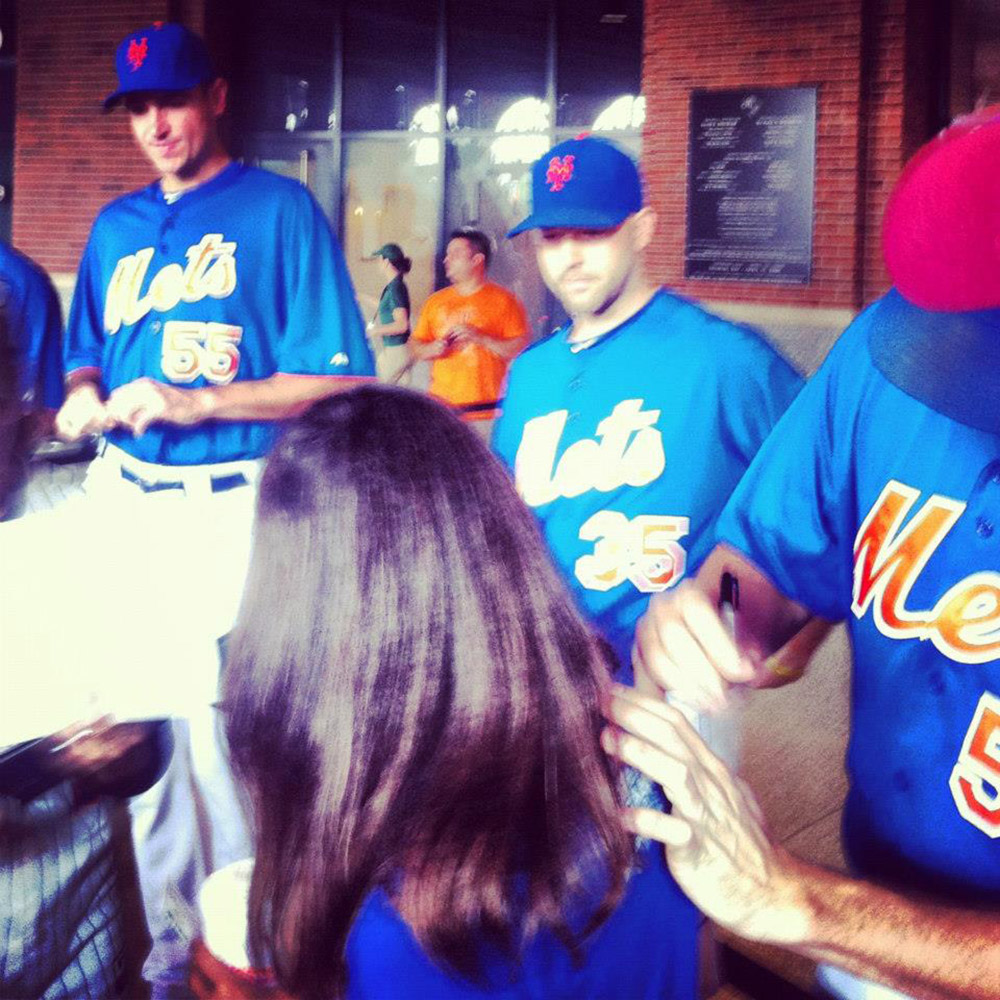
Above right, the author posing with a friend at CitiField; below, author being signed by the Mets. Actual sports photographs courtesy of the New York Post + Guardian, respectively.

253151_10100604110908818_661551042_n

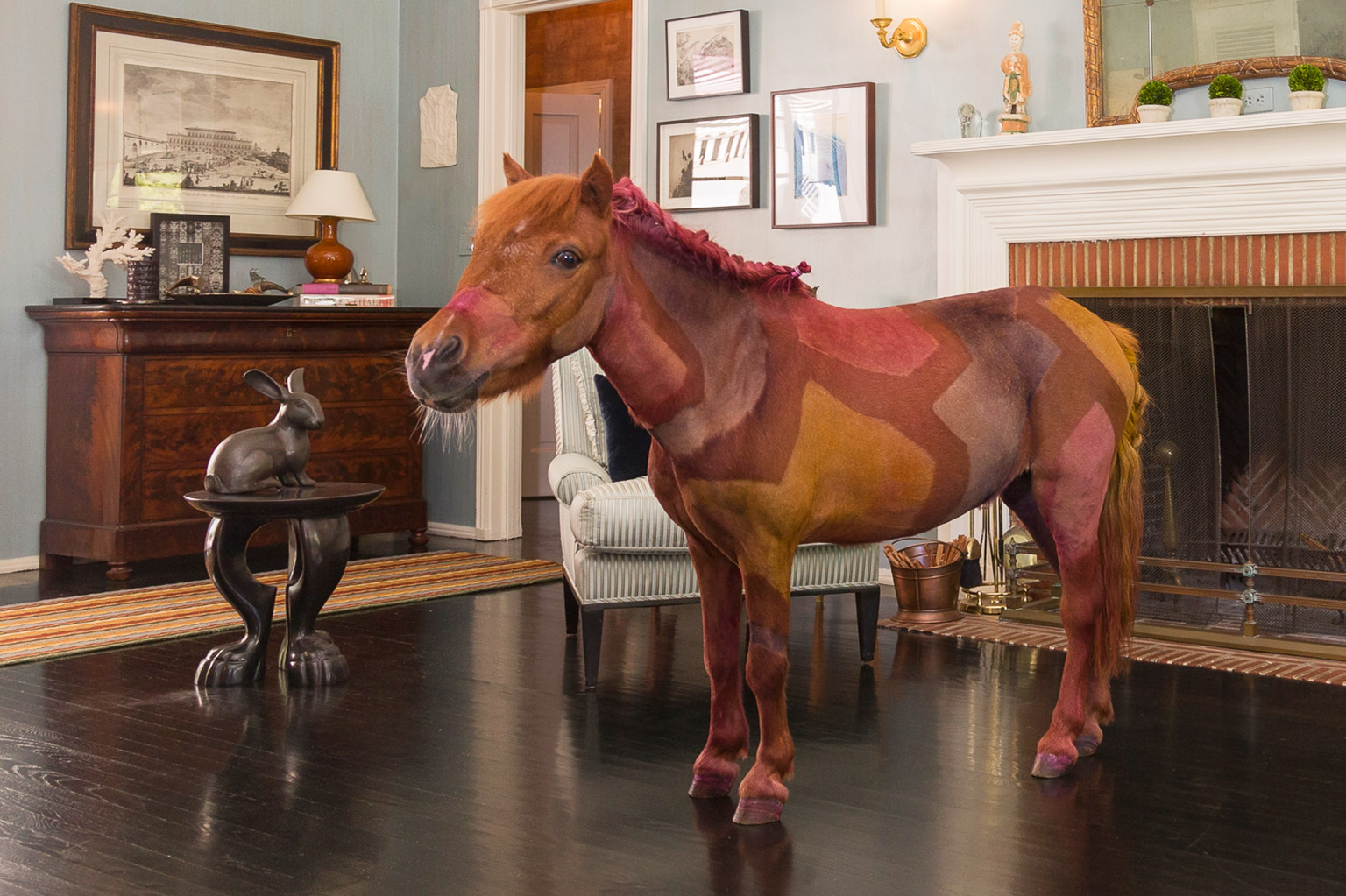
A friend sent me and a few other Los Angeles-area people a message a few days back about this local visual artist—Joe Sola—and his recently opened solo exhibition, A Painted Horse by Joe Sola, at TIF SIGFRIDS in Hollywood. According to a recent Huffington Post article, Sola was inspired by a horse he saw painted like a flower at the Kentucky Derby a few years back.

The gallery’s write-up on the exhibit goes out of its way to explain how well Riba, the horse, is being treated, stating that she “will only be in the installation for opening hours.” They continue:

“For the duration of the exhibition she will be shuttled to and from her loving home in the San Fernando Valley by a professional horse wrangler who will look after her general health and provide her with fresh water and choice hay throughout the day. During the exhibition she will receive daily Reike treatments to both measure and support her well being. The artist, working with a leading professional animal groomer, used creative grooming hair dye specifically designed for use on animals. Only four visitors at a time will be permitted into the gallery to view the exhibition.”

On a friend’s Facebook post regarding the exhibition, someone tied to the show/gallery explains further: “Both the gallery and the owner of Riba could not love animals more, we would never dream of putting an animal in a situation where he or she is not completely comfortable and happy.”

We could go back and forth until the end of time, I imagine, as to what we think the animal thinks about all of this. The closest analogy I can personally make is how my dog would feel if I did this to him. I have no doubt that I could use these special vegetable dies designed for animal use to get him looking pretty funky in a similar manner without harming him or causing him much discomfort. And he might even like it—as far as I could figure, since he can’t tell me—assuming we gave him enough dog treats and told him he was pretty enough, Pavlov-style.

But I think that’s all a bit beside the point and gives clarity to the gallery + artist’s need to oversell the lack of cruelty by hauling in an animal grooming specialist and Reike practitioners. It’s not about physical harm; it’s about exploitation and humiliation. We’d never do this to a human who couldn’t communicate consent or lack thereof because it would be a clear violation of their free will and violent disregard for their humanity—it’d be active humiliation of another being.

Violence doesn’t have to include the use of physical force—though I imagine Riba would have walked away if given the option to do so while being painted and prepped for this exhibit and likely had to be physically restrained. Point being though, violence can and does, every day, involve both physical force and/or power to harm or deprive a being of its rights.

One can argue humanity—or a similar concept—is one that remains unique to humans and even that animals have no inherent rights. But that’s where my ilk in the animal rights + ethical vegan community would diverge from anyone holding such a point of view. That’s why we don’t eat animal flesh, it’s why we don’t partake in animal milk or other products made from it, and it’s why many of us see this exploitation of animals for the sake of humans’ entertainment as abuse and violence, regardless of all the good intentions, well-meaning words, carpeted floors, air conditioning, and channeling of equine healing energy in the world.

It’s violent and wrong.

The exhibition itself ends after this Saturday. I’m not usually one to wish negativity on others and certainly don’t for anyone involved in the show, but here’s hoping it did terribly and travels nowhere.

Photographs by Joe Sola.

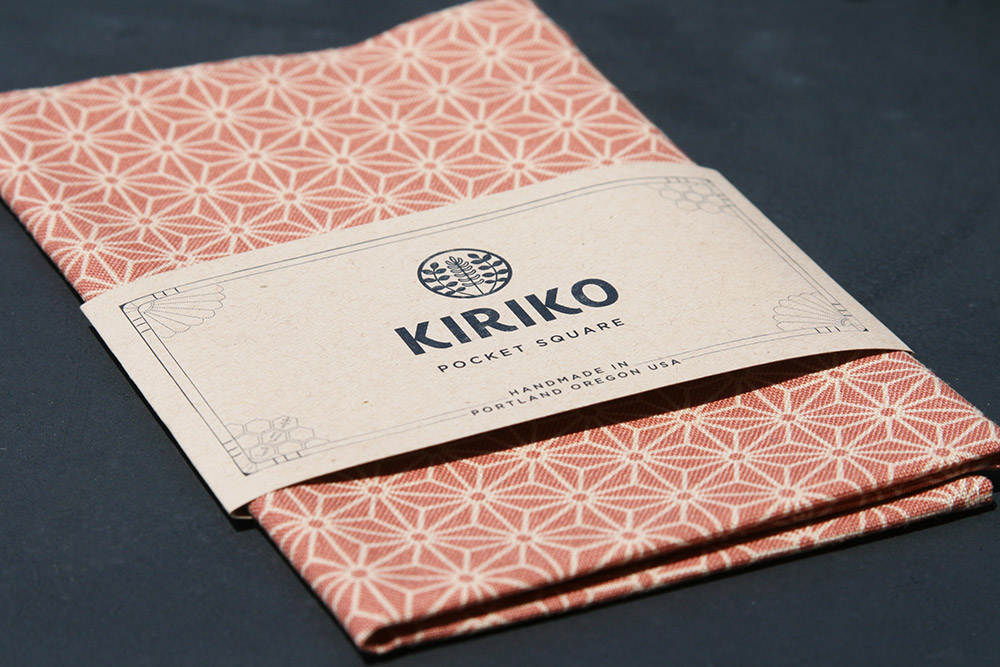
A while back, in preparation for the wedding that I recently officiated for friends in western Massachusetts, I sought out some new wedding duds, starting with the pocket square and building out from there.

I ended up finding a beautiful one that I ended up buying at Modern Folk in Ojai, made by a company I’d been aware of but hadn’t really known previously—Kiriko out of Portland, Oregon.

20150716_4475

To say that Kiriko is obsessed with the materials they work in is putting it mildly. As they state:

“Textiles tell a story. Long ago, patterns had meaning. Cloth was hand-woven and dyes were seasonal. Each scrap of fabric brought back time and place. We cycled through seasons, not trends. We made memories, not mass-produced goods. Then we began to lose touch with tradition. We stopped treasuring our clothes. At Kiriko, we believe fabric is everything. We searched Japan for centuries-old denim, hard-died shibori, and vibrant kasuri. Our scarves and ties showcase traditional craftsmanship and care. Wear them. Love them. Hand them down.”

Most of us can relate to the idea of a treasured garment—a memory-soaked jean jacket handed down from your father, for instance; something made to last, not be replaced. It’s a concept that had been all too rare before recently. Now, it’s a popular one in many circles, but one that usually caries a hefty price tag, wether you feel it’s justified or not.

One recent trend that’s been a bit enigmatic in my mind is the obsession with indigo dying; an obsession very central to Kiriko’s core principals and one they explain with far more expertise than we can claim:

Ai-zome is a natural indigo dyeing technique originated in Japan. The Ai-Zome process spans over three hundred days, from planting to the creation of the dye pigments.

Artisans are deeply involved in every step in the process, from seeding, reaping, desiccating, and fermenting to make these deep indigo pigments. While most dyeing techniques are seasonal, using raw plants to extract pigments, Ai-Zome pigments use a dried indigo and can be used and made all year round. The dye liquor is free of chemical products as the artisans use only lye and coal in the pigment mixture.

Ai-Zome is traditionally only used on natural fabrics. Usually cotton, the fabric is repeatedly dipped and soaked into the indigo liquor over twenty times over the course of many weeks to bring out the rich color. Ai-Zome has a particularly exceptional dark blue compared to other indigo dyes. This traditional, natural technique unfortunately has been diminishing by the development of new dyeing techniques. Today, less than 1% of indigo dyed garments are using natural, chemical-free indigo dyes similar to that of Ai-Zome.

Why natural dying is better than chemical? Fabric fibers bond with natural indigo cells, allowing the dye to adhere more effectively. While chemical indigo cells will take, the weak bond creates a dye that easily washes away and bleeds onto other materials. The larger, natural indigo bonds hold strong, and are less likely to transfer through day-to-day use.”

aizome-illustration

So, this is way beyond Rit Royal Blue.

Kiriko certainly represents one of these new, heavy-in-process, return to artisan quality companies, some of whom seem to be profiting off cyclical trends, some of whom truly seem to have a passion and reason for what they’re doing and how they’re doing it. This company strikes me as one that falls more in the latter category than in the former and—though I’ll avoid the products they choose to pair with animal leather—I definitely plan to purchase more of their ties, pocket squares, and other textile products.

You can watch Kiriko’s promotional video below. All images, save the one of my pocket square, from Kiriko’s Web site, from which you can order products directly.