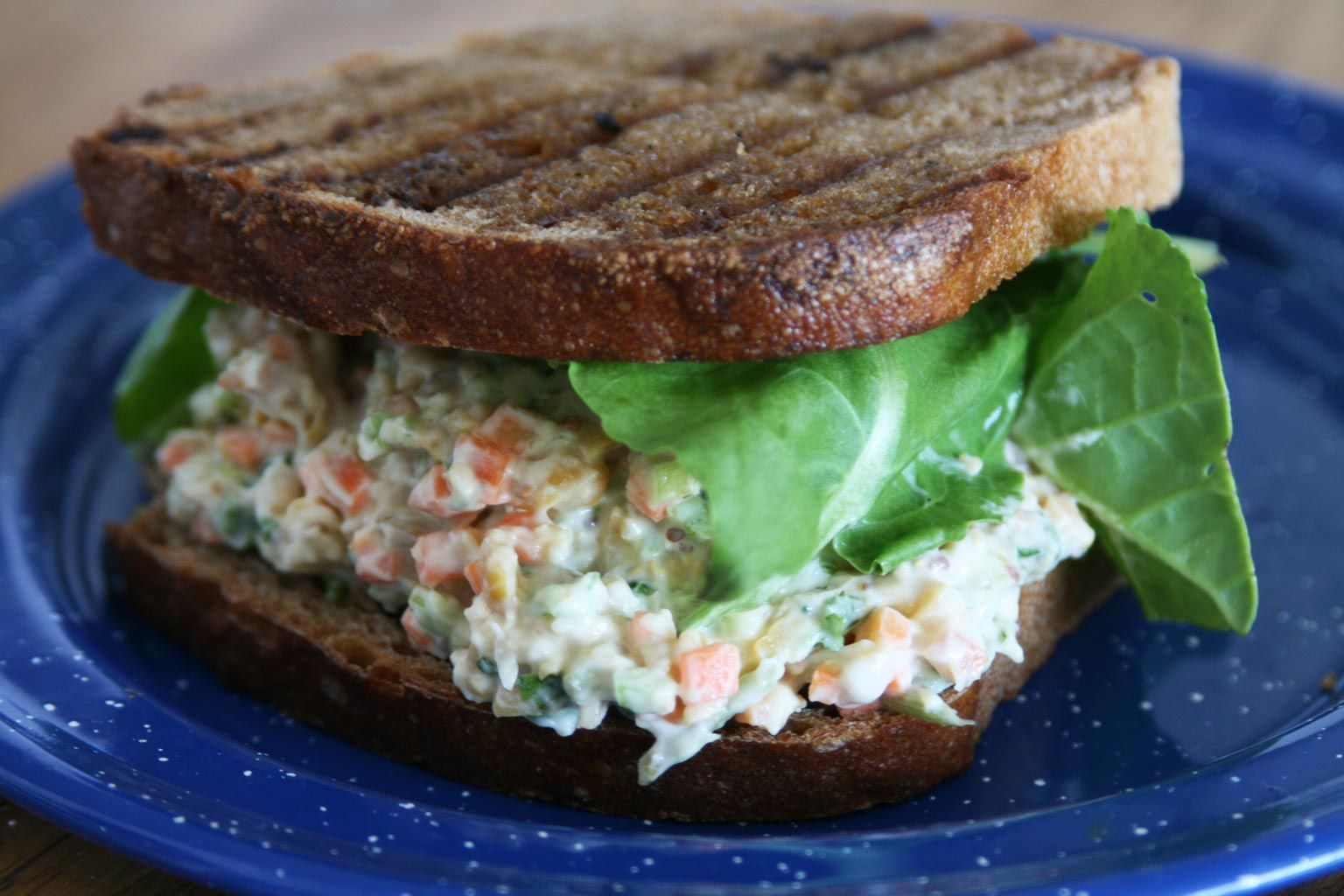
A good friend of ours travels to India about once a year and has for a long time now. Now, we know plenty of people who have been to India for one reason or another—work, wedding, leisure—but we don’t know anyone who’s so obviously bound to the place like our friend, Justin. So we asked him recently to take a minute and tell us what it was that kept him going back; what he thought it might be that connected him strongly to the people, culture, and land that make up India. This is what he told us. Words and photos, courtesy of Justin. And Pico, Justin’s son, pictured in that last photo there…which I’m sure he’ll be psyched about.

The first time I ever really experienced India was in September, 1995. Back then I took part in a Buddhist Studies study abroad program through Antioch College; it was something that I had looked forward to with great enthusiasm, and it changed me forever.

I still remember very clearly the atmosphere as we exited Indira Gandhi International Airport. There was something about the late night smoky air, the dreamlike yellow tinged lights from the lamp-posts outside the airport that attracted swarms of hundreds of tiny diwali bugs, and the mixture of great bustling human activity and effortless leisure all mixed into a single moment. Needless to say, within a few short moments I was hooked.

Every minute of that trip, be it practicing Vipassana meditation in which our central instruction was something akin to “feel the mosquitoes bite you, and as they do, send them loving kindness”, exploring the site of the Buddha’s enlightenment and its surrounding villages, wandering around Mumbai or Varanasi, or experiencing the amazing beauty of the jeep ride from Darjeeling to Sikkim, was an act of confirmation. Every second was an act of chipping away at any attempt of resistance; any act to separate myself from my experiences. In this way India has become a part of me, and through my relationship with its culture, geography, and even sense of time, I have become part of it- we have become interwoven threads of being that make up the larger fabric of my being.

Since that first trip I have returned to India over a dozen times. I mainly go to continue with my study and practice of Buddhism, but there is also a little time set aside for a pilgrimage to new places—generally a place with some spiritual significance. It’s these places that seem to further connect me to India as it exists within space and across time- through pilgrimage I feel that I have the possibility to create a personal connection with say, a Buddhist Siddha from the tenth century, as well as the lineage of practice that has trickled down from him. In feeling that connection within myself, tenth century India becomes very alive for me, and I feel that I can relate to it; we constellate, and a steady stream of meaning descends from that connection.

I relate to India as a Buddhist chaplain in the sense that it is a place that inspires and challenges me. It informs my theological ground as it is the present home to much of the lineage of Buddhism that I am part of; the Karma Kagyu Lineage. Born somewhere in the ninth century, it spread from India to Tibet, and there it distilled and matured. Now it is spreading to the west, and it is amidst this new wave of transmission that India offers me the experience, the wisdom and the connection to my lineage so that I may help plant it’s seeds here, so that it may distill here, and mature, here, in Brooklyn.

As a cook, I cannot think of any other country with the range and the sophistication that India offers through its cuisine. As in many places—and I hope this will always be the case in my home—the centrality of food, and the communal sharing of food is extremely important. People come together to share food; in doing so they share one another’s experiences, including their shared experience of the food that they consume together.

I pray that just as my relationship with India will deepen and become tempered over time, that the wealth that it offers me, as a Buddhist yogi chaplain, as curious wandering father, and as a cook will continue to percolate within me and offer clarity and depth in all that I do.


Looking back at India Week so far—our blog’s very first themed week—we realize the cast of things has tended toward the negative.  First declaring there’s no good indie music in the entire country of India, then interviewing our good friend, Shehzad Nadeem, on his new book about the effect outsourcing has on Indians. Not wanting to give the impression that we are ‘haters,’ as they say, we now take a turn in the week for the positive with what many, ourselves included, count as their sole or at least primary exposure to the country and its culture: FOOD!

I wasn’t really introduced to Indian food proper until college. Blame southern Virginia. Or the early nineties, your choice. Once the two of us were introduced though—Indian food and I—we became life-long friends. But, little did I know at the time, whereas the wilds of Indian cuisine are insanely easy to navigate as a vegetarian, they’re rather perilous for a vegan, with cream and clarified butter—ghee—hiding in many a dish. Who knew?! One such dish that is usually off limits for vegans is malai kofta, malai meaning clotted cream, kofta meaning minced up meat—or, in Inidian food, usually vegetables and nuts—and formed into balls. But rejoice! After a little bit of trial and error, Katie and I worked up what we must say is quite a nice vegan version that you can make at home. We’ll admit—it’s a bit intense, work-wise, but it is TOTALLY worth it.

Here we go.

Vegan Malai Kofta
For the Kofta
• .5 Cup Whole Nuts (we used a combination of cashews, brazil, and macadamia, all roasted, not raw, but you can use any relatively fatty nut)
• 2 large Potatoes, chopped and un-peeled
• 2 large Carrots, diced and un-peeled
• A Quarter Head of Cauliflower, cut into 2″ chunks or so
• 2 Fresh Chilies, cut lengthwise, seeds removed, and then finely chopped
• 16 oz. Bag of Frozen Peas
• 1 tsp. Chili Powder
• 1 tsp. Smoked Paprika
• 1 tsp. Cumin (fresh whole seeds if possible, black cumin’s great for this)
• 1 tsp. Cardamom Seeds (from fresh pods, if possible)
• 1 tsp. Coriander (fresh, if possible)
• Vegetable or Olive Oil
For the Sauce
• 1.5 large Sweet Onion, peeled and finely chopped
• 3 Tomatoes, finely diced
• 5 cloves Garlic, smashed, peeled, and chunked
• 1 inch Ginger, peeled and finely chopped or grated
• .25 Cup Vegetable Broth
• .25-.5 Cup Tofu-Based Cream Cheese Alternative (see note in text)

So, first off, if using fresh spices, place the cumin, cardamom, and coriander in a warmed skillet and heat over medium heat, swirling them around to evenly brown everything for about five minutes. Lower the heat a bit of swirl more if the cumin starts to pop out of the skillet. Let the mixture cool and then transfer them to a coffee or spice grinder, grinding them into a fine powder.

At this point we like to focus on making the kofta—the nut-vegetable balls—and then start in on the sauce. Boil the potatoes in a large pot with enough water to keep them submerged. Cook for 10 to 15 minutes, until they’re tender to a fork, remove from heat and drain. In the meantime, saute your cauliflower, carrots, chilies, and peas in about a tablespoon of oil in a separate skillet over medium-high heat uncovered for about 5 or 10 minutes to brown the edges on everything, stirring often. Lower the heat to medium-low and cover, cooking until everything’s very tender, about 30 or 40 minutes. While  your vegetables are cooking, blend your nuts until fine in a blender, coffee grinder, or food processor. Ouch, right? Once all that’s done, add everything—spice mixture, additional spices (chili and paprika), vegetables, and nuts—to a large mixing bowl and thoroughly mash it all together by hand. It’ll be a bit chunky still but cohesive when you’re done. Now, gingerly form the mixture into good sized balls—3″ in diameter or so, but whatever seems to stay together for you—and, in a skillet on medium-high heat and filled a couple inches deep with oil, fry the balls until browned on the outside, carefully turning with a fork or spatula to brown evenly. Do these four or so at a time and, once browned, set them aside in a dish with a paper towel to absorb excess oil. Repeat until you’ve used up all the mixture and then set the kofta aside. On to the sauce!

If you’ve got a big stove and a bunch of skilled hands, you can certainly have one person prepare the sauce as another makes the kofta. For the sauce, saute your onions in a large skillet on medium heat with one or two tablespoons of oil until they become translucent and the edges brown but don’t burn (5-10 minutes). Next, add the garlic chunks and brown for about five minutes. Now add the diced tomatoes, ginger, and vegetable broth to the skillet, stirring everything together and covering. Cook for about 15 minutes, stirring occasionally and allowing the tomatoes to break down a bit. Remove from heat and allow to cool a bit. Now either add the mixture to a blender or, if you’ve got one, use an immersion blender (they rule) in the pan to purée into a smooth sauce. If you’re using the immersion, be careful to make sure you don’t get it all over yourself or the walls. Generally, it’s best to use one with a  deeper dish that allows you tot totally submerge the head of the blender. If you used a conventional blender and removed the sauce, now return it to the same large skillet and simmer on low. Stir in your tofu cream cheese allowing the sauce to lighten and become creamy. If you’re trying to avoid soy, we’re thinking you could also make a cashew cream by blending soaked raw cashews to an equal amount, but we haven’t tried that ourselves. Next time! Once the sauce is creamy and tasty enough for you (add spices and/or salt as you like), gently add the kofta and simmer uncovered for 5 to 10 minutes, turning the kofta balls to coat them but keeping an eye on them so they don’t break down too much. They may break apart a bit, as they’re pretty delicate, but they should stay together for the most part.

Serve with basmati cooked with whole cardamom pods and, if you’ve got it, some nice Indian bread.

A few weeks ago I was talking with my mom on the phone and outsourcing came up. Somehow. And in the usual way that most Americans think of it—”Why are all these paying jobs going to people outside of our country’s borders when our economy’s hurting and we have so many people out of work.” My mom went as far as to propose a boycott of certain companies until they bring outsourced jobs home. When I asked what would happen when everyone’s bills shot up because said companies would be paying higher wages for said jobs, the conversation sort of petered out. But it’s a commonly enough posited question and quandary. What’s not commonly talked about though is how all this outsourcing of work and, it turns out, culture is affecting the people it’s all being outsourced to. Such is the subject of a new book, Dead Ringers, written by Shehzad Nadeem, Assistant Professor of Sociology at the City University of New York. We got a chance to talk with Nadeem about his book, globalization and its effect around the world, Indian Doppelgängers, and why people should read books with charts. I know. We’re WAY out of our depth.

And, in full disclosure, Shehzad is a friend of ours and probably one of the smartest, nicest people we know. Not that that should cloud you’re judgement on anything. You should just know that he rules. And, if you’re more the New York Magazine type, less the New Yorker type and aren’t likely to finish this interview, you should know that Shehzad’s holding a book release party that’s open to the public tomorrow night at powerHouse Arena in DUMBO from 7-9PM. I bet there will totally be chart-shaped cakes. RSVP on powerHouse’s site. And know that there likely will not be chart-shaped cakes. And that powerHouse Arena is not an actual arena….. ON TO THE INTERVIEW!
Kindness of Ravens: Okay, so, the thing that surprised me—in a good way—when I first picked up your book was that it did seem to focus on the effect this has on the culture of Indians rather than, say, a ‘They’re taking all our jobs’ kind of mentality, which is where most people’s mind go when we start talking about outsourcing. But it’s such a strange, strange phenomenon—to be affected so significantly and actively by something seemingly so trivial to most of us. What brought you to write about this? Why’d you get interested in the subject in the first place?

Shehzad Nadeem: I was interested in corporate deception. Multinational companies wanted to send white collar work abroad on a mass scale to save on labor costs, but they knew that people would be anxious and angry about it. So they found a way to shift the work in a relatively invisible manner, a way of occluding the geographic signature, “Made in India.” We’re all now familiar now with the Indian call center industry, which frequently requires employees to don Western identities in providing customer service. Workers also undergo training in Western accents and popular culture and are discouraged from disclosing their location on the phone. (If pressed, many are simply told to lie.)

To employers and executives, these are white lies. To Indian workers they’re tainted gray. To Western workers they’re soot black. They’re lies that justify, complicate, and deceive. The paradox is that outsourcing is also a material truth, a series of concrete, mimetic practices. A forged truth. In a word, a masquerade. What is it like, I ask, to act like Americans and Europeans and live as if you’re in time zones a world apart?

Which relates to the title. The term “dead ringer” refers to one who strongly resembles another. In its original meaning, a ringer is a fast horse that’s furtively entered into a competition in place of a slow or injured one. Here workers in the global south are substituted for their more expensive counterparts in developed countries. To all outward appearances, the names and neutered accents, the workplace cultures and structures, the identities and lifestyles resemble those of their country of origin. Upon closer inspection, however, you see how they diverge from the mold. I found this sameness and difference fascinating.

KoR: My brain just grew. No, that all makes sense, and I think, on that level, it’s something that most of us are aware of, generally. But I think most of us view this as a recent development. How long have we actually been outsourcing these sorts of jobs? Where’d the idea originally come from?

SN: In the 1990s, General Electric established a joint venture in the country and subcontracted software development and maintenance and back-office work to Indian suppliers, such as Wipro and Tata. And British Airways sent call center work. Other multinationals, such as Microsoft, Cisco, Xerox, and Honeywell, soon followed suit. A managing director at one multinational put the rationale plainly: “The country offered us cheap labor and skilled people.”

KoR: I’ll refrain from any comment on the name of that one company. So, I have to ask—What do you think of that NBC show, “Outsourced”? I’ve only seen it once, but it seemed really odd to me to make a comedy out of that kind of situation.

SN: The first time I watched the sitcom, I cringed. I cringed, in particular, because of an off-color, phallic joke: American manager to Indian employee named Manmeet: “You mean to tell me your name is Man-meat?!” But I cringed more generally because this off-putting show reminded me of the many cringe-worthy aspects of the outsourcing industry—the graveyard shifts, the long and busy work hours, the heavy-handed management, the cultural and temporal confusion. And in this, may lay the show’s brilliance—it’s as uncomfortable to watch as the industry is to observe.

KoR: Thank god. I had a vague fear you would be like, “It’s totally an intelligent and hilarious comment on the globalization of commerce and societal consequences,” or something. But have you given any thought to pirating some sort of ‘Now the Hit NBC Series, Outsourced’ sticker and slapping it on your book for extra sales? It might work, man…

SN: A very brilliant idea.

KoR: That one’s on the house. So, at one point you write that Indians employed in this sort of work are “caught in a cycle of hope and disappointment.” Can you explain that a little bit?

SN: On my first research trip to New Delhi I took a taxi down National Highway 8 to Gurgaon, an alleged former backwater and present-day outsourcing hub and “mall capital.” When crossing the flyover that connects the two cities, my gaze drifted from the craggy fields below to the billboards above, one of which featured an outsized call center worker’s comely visage, fair and framed by raven-black hair, flashing a winning smile. Welcomed by a quaint sign that read, “Thank you for visit,” we passed through a toll and armed checkpoint and entered a relatively barren stretch of road. Then, almost without warning, the new metropolis started from the dusty plain like a strutting peacock. Its plumage was fine but its calls were loud and course. The taxi driver’s teenage son stared with mouth agog at the iridescent whirl of office towers, apartment blocks, hotels, and fine restaurants. He said slowly and with wonder, “Call center-walleh idhar rahte hai.” (“The call center ones live here”). It was not Dubai, but Gurgaon had that “city of tomorrow” feel: cement trucks, proletarians, scaffolding, and cranes offset by smartly dressed professionals shopping for Western brands at malls named Ambience, Amusement, Galaxy, Marriage, Scottish, and Specialty; the hot gleam of dynamic steal and glass facades in the afternoon sun balanced by the haze and roar of traffic and construction. These were marvelous and moving sights.

But the embrace was not entirely rapturous. The high-rises were impressive, the signage luminous, and the private clubs cozy, but there were also power outages and water shortages and slum neighborhoods. (The real estate bubble has since burst, halting mall construction and depopulating office parks and luxury housing complexes, one of which famously featured a golf course and “cigar lounge.”) Misgivings about the industry that had underwritten Gurgaon’s rapid rise were muted but multiple. Talk of poor labor conditions, dead-ends, graveyard shifts, accent neutralization, and identity shifting gave some a postcolonial pause. The same news media that had so loudly sung the industry’s praises began expressing concern. “Stressed Techies Losing Sex Drive,” read one headline. “Stressed Youth Turning to Acupressure,” warned another. We came to know that call center work “turn brains into soup” and people with “high ambitions either leave call centres for something better or get fired.” Still, outsourcing was creating jobs. And thus the animating paradox of workers’ condition: They’re reaping the benefits of the corporate search for cut-rate labor but also bearing the burdens.

KoR: How did you go about doing the legwork for this? Was it largely source material research or was there a lot of personal interviewing?

SN: The book’s based on ethnographic observation and over a hundred interviews with workers, managers, executives, trade unionists and industry reps. Naturally, companies had nothing to gain by talking to a slight, notebook-clutching researcher and so it was very difficult to get access to workplaces. But once I was able to get in—and it did take some doing—people gave of their time freely, and for that I’m infinitely grateful. All told, it took about five years to research, write, rewrite, edit, and copyedit the book. That includes the fieldwork in India – primarily in Bombay, Chennai, and Delhi—as well as New York and L.A. It was tiring but I’m happy with the end product.

KoR: How did most people react then to you wanting to talk with them about this kind of subject matter? I could see there being a defensiveness or a reluctance to realistically look at what was going on, were I them.

SN: They’re very guarded. And this sensitivity pervades workplaces. For example, when I went to one company in northern Bombay six sheepish young people were seated quietly on cramped leather couches in the lobby busily filling out job applications. Insecure security guards at the front desk checked bags for hammers, screwdrivers, cameras, recorders, and computer hardware—anything that could be used to smash, record, or steal. Passage into individual offices was restricted as the company has confidentiality agreements with its clients, such that visitors should not be allowed to espy a client’s name on letterhead or computer screen. It’s as if their work is somehow illicit; that, if found out, the game would be up.

That said, many executives often thought I was an MBA student and that, ideologically, I was like-minded. And so when people opened, they said some surprising things. The COO of one company confided only half-jokingly that he thinks India needs a short spell of dictatorship so it can quickly improve its infrastructure (roads, power supplies, etc.) and better compete with countries governed by authoritarian regimes like China. Democratic niceties just delay things. An IT leviathan, so to speak.

KoR: “Short spell of Dictatorship”? God. I feel like this kind of writing seems so important, obviously, bringing to light something that’s overlooked here in the west and may be willfully ignored by those who confront every day, I’m guessing, but it also strikes me as terribly sad. It’s just the too-familiar idea of the wealthy coming to a less wealthy place and offering jobs we don’t want, getting away with paying what many of us would consider deplorable or at least unfair wages, but still paying more than many of the workers there can be paid elsewhere. None of it seems at all right or easy to…fix, for lack of a better word, but what do we do? Is it just a matter of prying out facts, like this books is doing, so everyone talks about this and knows exactly what’s going on?

SN: There’s a public importance to writing, to uncovering and examining things in a sustained and careful fashion. In my case, I was looking at working lives, and how the livelihoods of people in the global north and south are inextricably connected. People often defend the outsourcing industry by saying that it pays well and that the work environments are much better than in many other Indian industries. As one executive put it, “The standards are pretty low here. It’s not hard to improve on them.” And in one sense, he’s absolutely right and the industry has provided employment for many young Indians. It’s thus important not to overdramatize their plight. At times, they’re very happy. Especially so when they indulge in consumption binges at shopping malls or arrange romantic trysts at suburban night clubs or cafés.

But I don’t think that this is necessarily the right standard to apply. Rather I think you also need to look at the labor conditions under which outsourced work is performed in India and see how they compare with those in the US and UK, where the work originated. Not surprisingly, they’re worse. So employees are paid relatively well but the conditions of work can be strict—hours, by turns stress-filled and Chekhovian, monitored tightly. And as a result, offices are branded “electronic sweatshops” and workers, “cyber coolies.”

KoR: All this aside, in a sense, what do you like about India? We’ve heard wonderful things, but neither of us has ever been immersed in a non-Western culture, so it all seems so intimidating to us.

SN: Gertrude Stein once said that the trouble with Oakland is that “there isn’t any there there.” In India, there’s almost too much there. On one hand, there’s the resplendent poverty and suffering of India, its sad materiality. On the other, the cultural riches it possesses are mind-boggling. Its cities and towns are so varied and its people so charming. During my field research, not a single day went by in which I didn’t laugh heartily, even when I was sick.

KoR: Alright, I’m going to test your Inner PR Guru—Tell me why I, a relatively average reading American who—while I haven’t and won’t read any of the Twilight books—reads one non-fiction book for every, say, 15 works of fiction, tell me why I should read your book. I mean, there are charts in it, man. Charts!

SN: Well, I think the distinction between fiction and nonfiction is overdrawn. Fiction writers draw on facts and they find ways to creatively dramatize them, while nonfiction writers have to develop an imaginative sympathy with their subject. Take Kafka for example. He worked as an insurance clerk by day and wrote by night. His job was at times dreadfully boring, but he used it as an entry-point into the absurd. As he wrote, “The office is not a stupid institution; it belongs more to the realm of the fantastical than the stupid.” Hence the Byzantine bureaucracies in his work, the meaningless meanderings of his characters. Without the nonfiction of his daily life, there would be no fictional metamorphosis.

KoR: Way to give a super-smart answer to my mundane question, Nadeem. Professored again!
As mentioned above, Dead Ringer‘s Book Release Party is being held tomorrow night in DUMBO, details and RSVP information here. And if you can’t make that, you can pick up his book via the Princeton site, or, if you’re more the Amazon type, there too. Or, better still, walk over to your local bookstore and ask them to order a copy if they don’t have it on their shelves. The clerk will think you’re super-smart.
Photo of the author by Erum Nadeem.

Today marks the beginning of our blog’s very first themed week—India Week. Don’t ask how it came about, but, through the alignment of various random starts, all week we’ll be bringing you stories from the great subcontinent, food, and, today, music.

Our original intention was to scour the interweb in search of the various indie Indian bands for today’s post, likely choosing from a virtual plethora of awesome indie bands we would doubtless find. I mean, at the very least, how can you resist the moniker of indie Indian? But here’s the thing—that did not work out. I’m not saying there aren’t any good independent musicians in India, I’m just saying, they’re very hard to find. It seems like most of what we combed through were myriad variations on metal, bizarre but aurally flat electro-Bollywood smash-ups, and some kind of weak psych.

This is coming off as overly harsh though, I realize as I write it. We did happen across a pretty decent new-folk group called Swarathma and found a seemingly exciting site for independent musicians in India, called TempoStand, that allows them to post and distribute their music, so that’s cool (we kinda thought this guy had some promise, in an Indian K Records sort of way). But, most of it was simply not our cup of Darjeeling.

Then, on the recommendation of our friend, Anne, we checked out a Brooklyn-based band called Red Baraat, who is kind of awesome, it turns out. In their own words, they are “the first and only dhol ‘n’ brass band in North America, melding the infectious North Indian rhythm Bhangra with brass funk and expressing the human spirit through improvisation and a powerful live sound.” Now, usually we steer WELL clear of anyone or thing that mentions the word funk, in any capacity. But this band just sounds like one big awesome party. Kind of like an Indian Gogol Bordello. That’s hard to not like, funk or no funk.

We can only imagine Red Baraat’s live show is messed up fun, so you can catch the band on tour and at various outdoor music festivals once the warm weather hits. In the meantime, check out their song, “Punjabi Wedding Song (Balle Balle),” as this week’s Song of the Week, listen to and buy Red Baraat’s album here and take a look at an interview they did last year with the Village Voice.

And be sure to stay tuned for more India Week features!

Signed, numbered Shepard Fairey screen print sold with 100% of the proceeds going to the Japanese Red Cross. All 700 sold out in roughly 15 minutes.

You may or may not know, dear reader, that I have an awesome bike. Maybe that’s a bit forward though, like saying, “I’ve got an awesome cat.” I don’t own the cat, he’s a free spirit, and it’s disrespectful—nay, ABOMINABLE—to claim sovereignty over any spirit, especially one so mighty and wild. Such is the case with my bike, The St. Tropez. The Saint, for short.

In New York, unless you’re either crazy-tough or just crazy-crazy, you probably haven’t done that much biking around over these past few, terrible, ice-torn, blizzard-hewn months. But that time is coming to a close. Much as Sauron’s rule came to a close with one faithful act as the smoke-filled skies cleared in a singular, glorious movement, spring is here. And, though we have yet to get in to the truly awesome months, we’ve had a taste of those stoop-sitting, cheap-beer-drinking, bike-riding days. And now we’re thirsty for it.

Seems like we’re not alone. Bicycle Habitat and Recycle-a-Bicycle (the Saint’s point of origin, by the by) are holding Bicycle Trade-In Event next Saturday, March 26. You can bring your used bike to RaB’s SoHo location at 250 Lafayette for a $50 voucher to go toward your new Recycle-a-Bicycle bike—a bike risen from the ashes and built anew for you by NYC public school kids in RaB’s bike mechanic courses. Like a phoenix, but with two wheels and a lotta heart.

Need more NYC-centic bike info? Our 2009 post is here and has a wealth of hopefully still accurate knowledge.

New Yorkers, roll out!

A couple months ago, we got an email from a friend who had a friend whose other friend was in a band out in the LA called White Arrows. Got it?

We played it cool, holding off on giving their stuff a listen right away—not out of some boring LA-NYC rivalry or because we’re actually cool but more because we happened to be happily sifting through quite a deluge of new music at the time. Recently though, after adding their tracks to a playlist, I caught myself walking down the street and singing one of theirs songs out loud, which is one of the many Is This Band Good tests. Others include Number of Songs Featured in Grey’s Anatomy, Number of Times Frontman/woman Can Rephrase “How Are You All Doing Tonight”, and the all-powerful Hiwere Test—”Hi, we’re White Arrows,” good; “Hi, we’re We Need a Password It Could be Helicopter,” not so good.

So it seems fitting to feature White Arrows with today’s Music Monday. They’re song, “8050 (Too Fast, Too Slow),” has not, to my knowledge, been played under a steamy scene of doctors making out in a broom closet, but it has been stuck in my head lately and, I have to say, I like it a lot. You can hear the rest of the EP on the band’s Bandcamp page.

Alright, so, for years now, we’ve been hearing about this March Madness, as it’s called. Being avid fans of NOT being fans of basketball, we never caught it.

“Basketball? Whatevs.” is essentially how we felt. We had shirts made.
But then we heard about these brackets, and, we have to admit—we LOVE an excuse to throw yourself into bizarrely complicated charts that figure stats, emotional connection, and loads of guesswork. So we suddenly felt kinda left out. Because, reader, we do not know a THING about basketball. I think there’s a hoop—that I’ve got—and, seemingly, teams run back and forth across a super-shiny court, putting the ball into the hoop until one team misses, and then the team that didn’t miss wins after a bunch more running usually.
So, no, we know little to nothing about the sport of basketball…but we DO know logos. The solution to our left out blues? We’ll start our OWN awesome bracket based entirely on the strength of each team’s logo. Nothing else. Not even the tiniest inkling of something we may have heard in passing as we changed the channel just a little too late as the news went to sports. Just the logo—how well does it communicate the team’s desired toughness and/or agility, does the simplicity of that mark give it strength or make me yawn, is that tiger jumping out to maul me or hug me? So that’s just what did, reader. I give you, the raven + crow endorsed March Madness bracket. Of logos.
Since some of it may require a little explanation, I feel compelled to pass on a little bit of our deliberation process as well. In most cases, cat logos won, because cats are cool. We realize that’s a bit of a flaw in our judgement. But we feel it course corrected in-process. Also, there are three teams whose logos are just a W. That’s lame.
First, we tackled the east, starting close to home. Awesome Bird head vs. Ohio State was easy.
Katie: I like that bird’s plumage. 

Troy: Yeah, Ohio State doesn’t have a chance.
Villanova against George Mason was another easy one. Shooting stars? What is it, prom?
Katie didn’t like the odd, angular juxtaposition of West Virginia’s logo and it just felt dated to us. Plus Clemson, cats, done.
The next ones confounded us a bit.
T: Hm, the playoffs could use a little more animal print.
K: Wait, who is that?
T: Let’s see…PRINCETON! What, is Harvard leopard print? That’d rule.
We liked the simplicity of impact provided by Xavier. Plus, the name combined with the look of the mark was super-X-Men-y, which I liked. Which made Katie want to go with Syracuse, just because she wanted to see an extra-small competition.
Washington vs. University of Georgia gave us a little trouble, but we ended up going with UGA, despite the fact that they look very Green Bay, which caused some concerns with branding confusion. Then, Long Island University didn’t have a chance, even in our book. Really, LIU? The ONLY logo without a transparent background?
Now in the west, Duke’s mark was too classic and well-done to pass over and Katie didn’t like the look of Hampton’s disturbingly angular pirate. Michigan vs. Tennessee?
K: Michigan. I like their slight flair against the boring T. At least they put some effort into it.
Cat won again Arizona (“Hey, our state starts with an A!”). And Oakland’s “fearsome” bear was way too clip-art-y for us to even start to hold its own against the longhorn.
T: It looks like a roller coaster logo or something
Next?
K: Bucknell? And some sort of wolf-dog. Ugh. This one’s tough. I think maybe…Bucknell? If I go with what I said about the clip-art with the bear…but it’s borderline.
T: I just can’t tell what that is with Bucknell. Oh, it’s a bison. It looks like an amoeba or something. And what’s it doing?
K: I think it’s punching. Like fighting. Fighting Bucknells?
T: Alright. We’ll go with Bucknell. Plus that wolf-dog looks totally oblivious.
K: Yeah, that’s more of a show dog.
Penn State was classic AND it had a cat. Sorry, Temple. Then N. Colorado and San Diego?
T: What’s going on with that spearheady team? And what do you think of that bear?
K: i’m not very terrified of him. But i might throw him a bone and go with him. We’re very anti-bear this round. Which is not very like us at all.

T: Alright. On to the south.
Boston U. vs. Kansas.
K: Ugh these guys are so bad. I don’t know. The south seems to be lacking in the cat department.
T: I mean this woodpecker guy, at least he’s sort of jaunty.
K: Mm-hm. I’ll go for him.
T: And Illinois…I’s? versus…Yosemite Sam?
K: Yeah, Illinois. I don’t even know what that guy is.
Next, Richmond against Vanderbilt.
K: Spider.
T: Why?
K: Oh, just a very nice clean design.
T: Agreed. So nothing to do with the fact that it’s richmond.
K: …no.
T: Alright. Next…whoa! Check out these mean birds. I wouldn’t go to that game for fear of being beat up by one or both of those birds. It’s tough though. They’re both pretty good.
We went with the symmetrical, bold-faced eagle, lookin’ you right in the eye, all tough as opposed to the “Oh, I’m SOOOOO mad at you,” teeth-gnashing cardinal.
Georgetown vs. VCU.
K: Hm. I like the ram, but i don’t like the placement of ‘VCU RAMS.’ But the G is just boring, so I’m going with the rams, I guess.
T: Nice. Next, a threatening peacock vs. a choo-choo train…. You gotta’ give it to ‘em both for choosing non-traditional subject matter.
K: I think I’m going to go peacock.
T: Why’s that?
K: It’s unnexpected.
T: Yeah, plus you gotta’ be pretty tough if you’re gonna make your mascot a peacock.
Florida State vs. Texas A&M.
K: I think the indian chief.
T: Despite potential race issues?
K: Yeah. It’s simple, I like that it’s contained, it doesn’t look like it’s on the side of a roller coaster.
T: Okay. Plus, is it ATM? TMA? What do i look at first there?
Akron vs. Notre Dame.
K: That antelope or whatever.
T: I think it’s a very fast kangaroo or something.
PITT vs. UNC.
K: PITT. It’s classic, I like that they put it in an arc—you don’t see that much…and i can’t tell what that other thing’s supposed to be.
Old Dominion lion vs. Butler dog.
K: I’m going with team doghead.
T: Classic illustration vs. cartoony. Agreed.
Utah against Kansas.
K: I’m going cathead this time.
T: Cat always wins. Plus, U State? Like, State University? That’s just confusing.
Belmont’s bear won out over Wisconsin’s oddly jaunty W—despite the bear’s cartoon look, we liked that it had some detail. St. John won out over Gonzaga because it at least attempted to be clever with its typography.
Wofford vs. Brigham Young.
T: I think with Urine W vs. Sad Y, Sad Y wins.
K: Sad Y it is. It’s a little bloated too….
T: Cheer up brigham young. It’ll be alright. Then, UCLA is too…
K: Little league.
T: I was going to say Peach Pit After Dark. Next up, Weirdly Sneaky Zorro vs. Gator. Hm. I say let’s go with Mr. Shifty. I wanna’ see that go on just to see what he does. Look at him. He’s totally gonna shiv the ref.
Which brought us to round two and some much quicker action. Paw print won out over animal print. Xavier oversimplified Syracuse. We couldn’t agree on Georgia and UNC, so we flipped a coin. Result: Heads—Fat G. The, we felt like, upon closer inspection, the tiger jumping out form behind the M looked more like he was going to hug you, which is not intimidating, so Texas took him down. Cats generally won out from there, and then, in the southwest, jaunty woodpecker wen ton to live another day as the itsy-bitsy spider inched its way past stoic eagle. The ostentatious glare of St. Pete was too much for the awkward Virginia ram, but it came down another coin flip for potentially offensive native american logo vs. anteroo. Result: My bizarre marsupial mammal won out. Classic bulldogs and Thundercat logos won out form there, and then Sad Y and Trojan Hat beat out Red Jumble of Letters and The Lurker, respectively.
In the end, it came down to a ruthless, wild affair, involving a simple, some might say elegant spider; a determined, but maybe a bit too flashy bird; a strong, silent longhorn bull; and a chubby bulldog. Who doesn’t love a chubby bulldog? Whereas the Longhorns took it in the end against Richmond’s Spiders, we really could have seen it going either way. But the important thing is that those were both strong logos and they came to play—not spell out their state’s name in a playful manner, not just outline the first letter of the name of their school, not stare with disinterest and, I’ll say it, aloofness (looking at you, Connecticut)—they came to play. And they did.
God bless you, Longhorns. God bless you and your orange, orange head.
As a slight postscript, it seems, in the time it’s taken to write this post, that two of our four predictions have come true. Go Stern Eagle and Chubby Bulldog!!!


A poster by Max Erdenberger of the Portland, Oregon-based advertising agency, Wieden + Kennedy has alreday raised nearly $15,000 towards the relief effort in Japan. 100% of the proceeds go to The Red Cross. Visit W+K’s page to donate and receive the finely made screenprinted poster on 80# cover stock or you can give directly to here as well.